
Protea burchellii x Protea obtusifolia
Protea burchellii x Protea obtusifolia
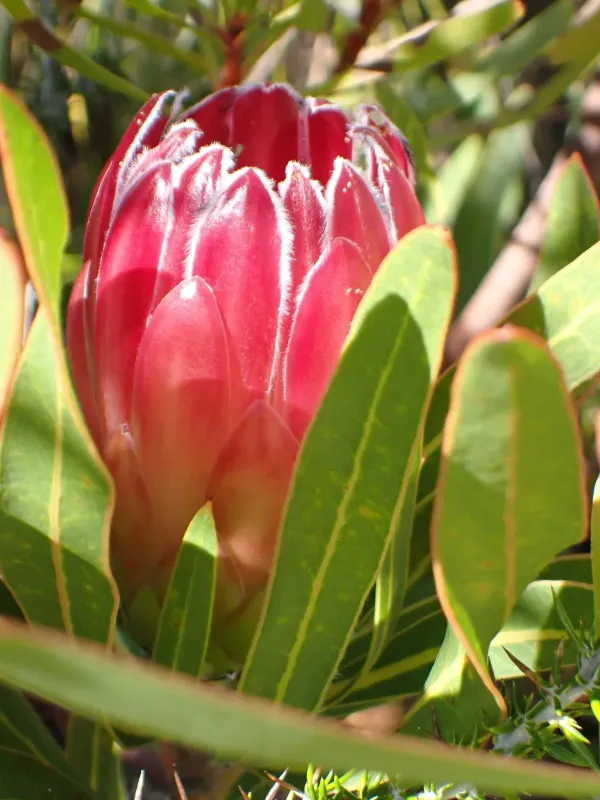
Description
Sowing dates
The propagation of this hybrid is predominantly carried out via semi-hardwood cuttings to ensure the preservation of the parent plant's specific traits.
Cuttings should be planted in a highly porous, well-draining medium, such as a mix of river sand and perlite, to prevent moisture accumulation.
The ideal window for taking cuttings is immediately after the flowering season when the plant begins to produce new vegetative growth.
During the rooting process, maintaining a consistent temperature between 20–24 degrees Celsius is essential for successful root development.
Once established, the young plants are transplanted into larger containers with specialized acidic soil media for further growth before being field-planted.
Growing requirements
This hybrid belongs to the Proteaceae family and combines the aesthetic beauty of its parents with improved hardiness for controlled cultivation.
Proteas require full, direct sunlight throughout the day to stimulate healthy growth and the production of large, vibrant inflorescences.
The soil must be acidic with a very low phosphorus content and excellent drainage, as the roots are highly sensitive to waterlogging and soil pathogens.
The climate should be Mediterranean-like, characterized by mild, frost-free winters and warm, sunny days to ensure optimal physiological function.
Adequate air circulation is a critical requirement in the growing area to prevent the accumulation of humidity and the onset of fungal diseases.
Yield
This variety is primarily grown as a commercial cut flower, highly valued for its structural beauty and long vase life in floral arrangements.
Productivity is closely linked to age-appropriate pruning, which shapes the bush and promotes the development of strong, new flower-bearing stems.
Well-maintained plants in professional settings can yield a steady supply of 15–20 high-quality stems per plant during the peak blooming season.
Proper harvest management and post-harvest handling are essential to ensure that the yield meets the strict requirements of the international flower market.
Given the durability of Protea stems, this crop is considered a profitable investment for growers focused on high-end floristry markets.
Main diseases and pests
Root rot caused by Phytophthora species is the most significant threat to Protea crops, usually triggered by poor drainage or overwatering.
Fungal foliar diseases, including leaf spot, may occur in poorly ventilated areas or during periods of prolonged high humidity.
Pests such as mealybugs and spider mites can infest the foliage, requiring diligent monitoring and targeted insecticide applications to control.
Integrated pest management strategies, emphasizing preventative sanitation and the use of healthy, disease-free stock, are vital for crop success.
Regular inspection of the root zone and canopy is necessary to catch any potential health issues before they affect the quality of the cut flowers.
Harvesting
The harvest should occur when the involucral bracts have fully opened, revealing the center of the inflorescence in its most attractive state.
Stems must be cut with sharp, sanitized tools, ensuring the cut is clean to facilitate optimal water uptake after harvest.
Immediately after cutting, the stems should be placed in clean water to prevent air bubbles from blocking the xylem vessels, which could cause wilting.
Proper transport involves keeping the flowers in an upright position to avoid bruising the large, heavy inflorescences during handling.
Post-harvest storage should take place in a cool, well-ventilated environment at temperatures around 5–8 degrees Celsius to maximize shelf life.