
Protea burchellii
Protea burchellii Stapf
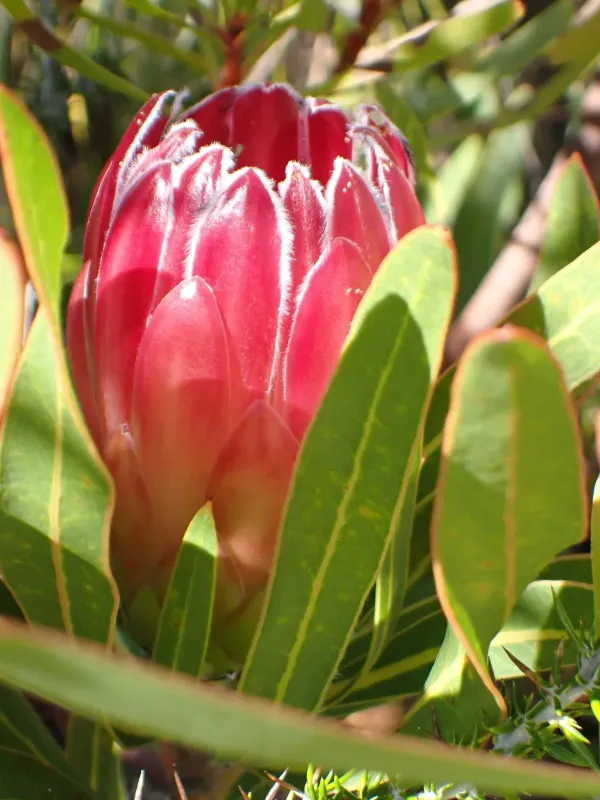
Description
Sowing dates
Propagation of Protea burchellii is typically performed via seeds or semi-hardwood cuttings in controlled nursery environments to ensure high success rates.
Seeds should be sown in a specialized, coarse, well-draining medium that is acidic to support the natural developmental needs of this Proteaceae species.
The optimal sowing time aligns with the cooling temperatures of late summer, which helps break dormancy and mimics the natural germination cycles of the plant.
Pre-treatment of seeds, including the use of smoke-infused water or specific stimulants, is often necessary to improve germination percentages significantly.
Seedlings require careful management during the early growth stages, particularly regarding the prevention of damping-off diseases caused by excess humidity.
Growing requirements
Protea burchellii thrives in Mediterranean-type climates, requiring plenty of direct sunlight and excellent airflow to remain vigorous throughout the year.
The soil must be sandy, low in phosphorus, and possess a low pH level, as this species is highly sensitive to nutrient imbalances and poor drainage.
Environmental control is crucial; the plant prefers warm, dry summers and mild winters, avoiding freezing temperatures that could damage young tissue.
Water management is the most important aspect of cultivation, as Protea burchellii is highly prone to root rot if the substrate stays waterlogged for too long.
Minimal fertilization is required, and only slow-release, low-phosphorus formulations should be applied to prevent burning the sensitive root system.
Yield
Yield in commercial protea farming is measured by the number of high-quality, long-stemmed inflorescences harvested per shrub within a production season.
Proper pruning practices are essential to stimulate lateral branching, which increases the density of flowering stems for the subsequent harvest cycle.
Under intensive cultivation systems with strict climate control, farmers can maintain consistent yields for several years until the bushes reach senescence.
Harvesting should be timed according to market demand, focusing on the stage of inflorescence maturity that offers the best vase life for the final consumer.
Economic output is heavily influenced by the quality of the stems, as symmetrical and vibrant flower heads command significantly higher market prices.
Main diseases and pests
Root rot caused by Phytophthora species is the most severe threat, often emerging when drainage and irrigation protocols are not strictly followed.
Common pests include spider mites and mealybugs, which thrive in protected greenhouse environments and can rapidly weaken the plant's structural integrity.
Fungal leaf spots can occur if humidity levels are allowed to rise too high, making regular ventilation of the growing area an absolute necessity.
Nutritional disorders, such as iron or magnesium chlorosis, are common symptoms of improper soil pH levels, requiring frequent testing and adjustment.
- Phytophthora root rot
- Spider mite infestations
- Powdery mildew and leaf spot
- Nutrient-related chlorosis
Harvesting
Harvesting is conducted manually using sterilized shears to prevent the transmission of pathogens between plants during the cutting process.
Stems are cut at a length that preserves enough foliage for the plant to continue its metabolic processes without excessive stress after the harvest.
Post-harvest care involves immediate hydration in high-quality preservative solutions to prevent vascular blockages and maximize longevity.
Temperature control post-harvest is vital; rapid cooling minimizes the respiration rate, which is necessary to maintain the freshness of the blooms.
Grading criteria include stem straightness, leaf condition, and the overall size and color intensity of the flower head before final packaging.