
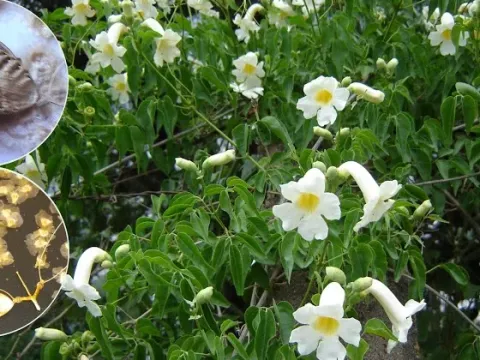
Pithecoctenium
Pithecoctenium
Planting Pithecoctenium in temperate regions is typically carried out in the spring, after the threat of frost has passed. For seed propagation, a seedling method is used, maintaining a constant germination temperature of 22–25 degrees Celsius.
What the section contains

Pithecoctenium
When sowing in open ground within tropical climates, seeds are placed at a depth of no more than 1–2 centimeters in prepared substrate. The beginning of the rainy season is considered optimal, ensuring natural soil moisture for the successful rooting of young seedlings.
To accelerate seed germination, pre-soaking in warm water for 12–24 hours is applied. This softens the hard seed coat and activates growth processes, which is critical for members of the Bignoniaceae family.
The plant possesses high growth vigor, so it is important to maintain a distance of at least 2–3 meters between seedlings during planting. This prevents competition for nutrients and ensures adequate air circulation around the vine.
Cuttings are also an effective method of propagation, usually performed at the end of the summer season. The use of rooting stimulants increases the survival rate of cuttings and accelerates the development of a robust root system in greenhouse conditions.
Pithecoctenium is a woody vine belonging to the Bignoniaceae family. In its natural environment, the plant is primarily distributed throughout the tropical and subtropical regions of Central and South America.
This crop is highly demanding regarding light and prefers open, sunny locations. Under shaded conditions, the vine's development slows down, and flowering becomes less intense, which negatively affects the plant's ornamental qualities.
For successful growth, fertile, well-drained soils with a neutral or slightly acidic pH are required. The plant does not tolerate waterlogging, so when planting in heavy clay soils, it is necessary to create a high-quality drainage layer.
Pithecoctenium requires regular watering, especially during its active vegetative growth phase. Despite its tolerance to short periods of drought, maintaining stable soil moisture is crucial for high biological productivity.
Due to its climbing growth habit, Pithecoctenium requires a reliable support structure. The plant's strong tendrils are capable of gripping any surface, which is why trellises, arches, or pergolas are installed for it in agricultural and landscaping designs.
The economic use of Pithecoctenium is primarily linked to its ornamental potential. In Latin American countries, it is often planted as a fast-growing landscaping element, capable of creating a hedge or a dense green wall in a short period.
The value of the plant also lies in its ability to form a thick canopy that provides significant shade. In hot climate zones, it is used to shade agricultural buildings and recreational areas, reducing the intensity of surface heating.
The biological productivity of the plant is expressed in the annual growth of its shoots, which can reach several meters. This allows the crop to be used for rapid vertical land planning and soil stabilization on slopes.
Some species of Pithecoctenium produce unique fruits with unusual shapes and prickly surfaces. While they lack major nutritional value, they are often used in decorative floristry and the creation of dried floral arrangements.
In the agricultural sector, the plant is valued as an ecological component that attracts insect pollinators. Its abundant flowering contributes to maintaining biodiversity in fields, which indirectly benefits neighboring entomophilous crops.
The primary threats to the health of Pithecoctenium are fungal diseases that develop under conditions of high humidity and poor aeration. If signs of powdery mildew appear, immediate treatment with systemic fungicides is required.
Root rots pose a serious danger if irrigation regimes are violated or if heavy soil mixes are used. For prevention, it is necessary to avoid waterlogging in the root zone and ensure efficient drainage of excess rainwater.
Among pests, sucking insects such as aphids and spider mites cause the most damage. In dry, hot climates, the spider mite population can proliferate rapidly, causing yellowing and premature leaf fall.
Scale insects can infest the stems of the plant, feeding on sap from the bark. Regular inspection of the lower parts of the shoots and the use of insecticides allow for the control of these pests while preserving the plant's ornamental value.
Combating pests and diseases requires a comprehensive approach, including both chemical treatments and agronomic methods. The latter include timely sanitary pruning of damaged areas and maintaining cleanliness around the base of the plant to reduce the infectious background.