
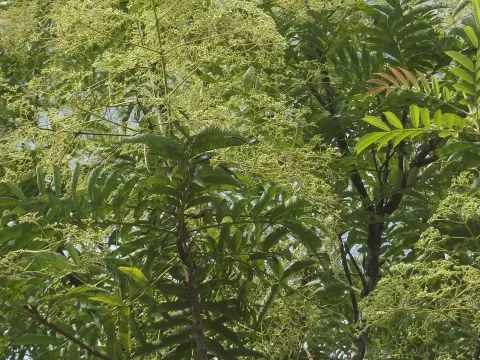
Peronema canescens
Peronema
The propagation of Peronema canescens is primarily carried out through generative methods using seeds. Seeds are collected from mature trees and then subjected to short-term stratification or soaking to enhance germination energy.
What the section contains

Peronema canescens
Sowing in nurseries is typically planned for the beginning of the rainy season to provide seedlings with an optimal hydrothermal regime during their first months. It is crucial to maintain moderate soil moisture without waterlogging, as young sprouts are sensitive to root rot.
Transplanting strengthened seedlings to their permanent location is conducted once they reach a height of 30–50 cm. For industrial cultivation, a planting grid of 3x3 or 4x4 meters is recommended, allowing plants to develop their canopy properly.
Peronema is characterized by a rapid growth rate in its early years, so agronomists advise regular inventory and culling of lagging specimens. Ensuring adequate sunlight is a critical factor for successful establishment.
In reforestation projects, Peronema is often used as a pioneer species capable of quickly occupying empty areas and creating a microclimate for other plant species.
Peronema canescens belongs to the Lamiaceae family, a biological feature that distinguishes it from other forest crops. The plant prefers well-drained alluvial soils with a neutral or slightly acidic reaction.
The crop requires a warm tropical climate with abundant rainfall throughout the year. The optimal temperature range for active vegetation is between 22 and 30 degrees Celsius, and the tree reacts extremely negatively to frost.
For successful cultivation, it is critical to provide access to direct sunlight, as Peronema is a light-demanding species. In heavy shade, stem deformation and a decrease in overall wood yield are observed.
Soil structure must ensure deep root penetration. Heavy clay soils without preliminary cultivation can slow down root system development and cause leaf chlorosis.
Agrotechnical maintenance includes regular weeding around the base of the trees during the first three years after planting, which prevents competition with weeds for nutrients.
The economic value of Peronema lies in its high-quality timber, known in Southeast Asian markets as Sungkai. The tree can reach significant sizes, making it promising for forestry.
When agrotechnical standards are met, the commercial harvest cycle can range from 15 to 25 years. During this period, the tree forms a powerful, straight trunk suitable for furniture production, finishing materials, and carpentry.
Peronema wood is valued for its aesthetic pattern, high strength, and resistance to atmospheric conditions. These indicators make it a sought-after resource in the regional construction sector.
Yield is measured by the volume of quality commercial timber per hectare of forest area. Intensive plantations allow for more uniform material compared to natural stands.
Effective management of plantations involves sanitary and thinning cuts, which contribute to improving stem quality and increasing the overall yield of commercial products by the end of the cycle.
The main threats to Peronema are related to a complex of pests that affect young shoots and leaves. Among these, leaf-eating insects and specific types of caterpillars are most commonly encountered.
Fungal diseases, such as leaf spot, can occur with high humidity and poor aeration in plantations. Preventive fungicide treatments are used in nurseries to combat them.
Root rots are a serious danger when the water regime is disrupted. Soil waterlogging creates favorable conditions for pathogens, which can lead to mass mortality of seedlings.
Competition from invasive plant species can suppress the growth of Peronema in the first years, so monitoring the phytosanitary state of the plantation is a priority.
To reduce the risks of pest infestation, it is recommended to plant Peronema within mixed forest ecosystems, which creates a natural barrier against the spread of infections and insect herbivores.
Harvesting Peronema involves felling trees that have reached the design stem diameter. The process requires care to avoid damaging neighboring young specimens in cases of selective logging systems.
After felling, initial processing is carried out: removal of branches and cross-cutting into assortments, depending on the intended use of the wood.
An important stage is the proper drying of timber after harvest. Peronema requires strict adherence to temperature and humidity regimes to avoid material cracking and deformation.
In modern forestry, efforts are made to minimize waste during harvesting by using bark and small branches for mulch or biofuel, which increases the overall profitability of the project.
The organization of logging operations must comply with the principles of sustainable resource management, ensuring timely restoration of harvested areas with new crop plantings.