
Carica
Carica L.
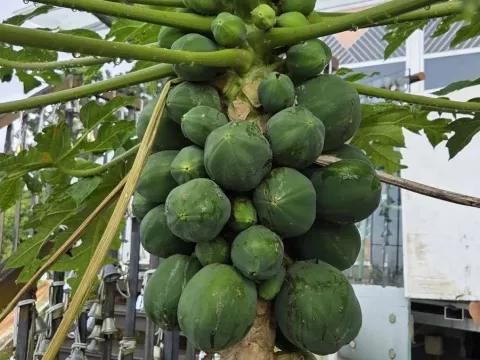
Carica (genus Carica L.) belongs to the Caricaceae family. This tropical genus originates from Central and South America, where it thrives in warm, frost-free environments. It is widely cultivated globally in tropical and subtropical regions for its fruit.
What the section contains


Carica
The plant is a fast-growing, succulent perennial tree with a single, straight trunk that can reach heights of up to 10 meters. Its large, deeply lobed leaves form a crown at the top, providing a distinct appearance common to the genus.
Optimal growth requires consistent temperatures between 25°C and 30°C. The plant is highly sensitive to cold; even minor frost exposure can cause significant physiological stress, lead to necrosis, or result in the death of the entire plant.
Soil requirements include excellent drainage, as the roots are prone to rotting in waterlogged conditions. Light, loamy, or sandy soils rich in organic matter are ideal for achieving maximum growth potential and healthy root development.
Sunlight exposure is a critical factor for the development of both the vegetative parts and the fruit. Carica requires full sun to ensure high sugar content in the fruit and to promote vigorous growth, avoiding shaded areas where development slows down.
The primary economic focus of Carica is fruit production. The fruits are rich in vitamins, antioxidants, and the enzyme papain, which is utilized extensively in the pharmaceutical and food processing industries for tenderizing meat and improving digestion.
Yield capacity is influenced by cultivar selection, tree density, and management practices. In intensive commercial plantations, farmers aim for high-density planting while ensuring that each tree has sufficient space for optimal air circulation.
Pollination is a vital aspect of yield management. Depending on the species, Carica can be dioecious or hermaphroditic. Producers must ensure an adequate number of pollen-producing plants to guarantee a successful fruit set across the orchard.
Commercial processing of the fruit includes the production of juices, dried snacks, and purees. The extraction of papain from the latex of green fruits adds significant value to the agricultural enterprise, providing a secondary income stream.
Productivity generally peaks during the first few years of the tree's life. After a few years, yields typically decline, and trees may become too tall for efficient harvesting, necessitating systematic replanting cycles to maintain profitability.
Fungal diseases are the most common threats to Carica, particularly those that target the roots and stems. Phytophthora rot is a severe concern, especially in areas with poor drainage or excessive soil moisture following heavy rainfall.
Insect pests, including aphids, whiteflies, and mites, pose a constant challenge. They damage the plant by feeding on leaves and serve as vectors for viral diseases such as papaya ringspot virus, which can devastate entire plantations.
Integrated pest management (IPM) is essential for maintaining a healthy crop. This includes regular field inspections, the use of disease-free planting material, and strategic applications of fungicides and insecticides as needed.
Cultural practices, such as removing infected trees and ensuring proper plant spacing, are key to preventing the rapid spread of diseases. Keeping the orchard floor clean and managing weeds also helps reduce pest habitats.
Biological controls, such as the introduction of beneficial predatory insects, are becoming a preferred strategy for large-scale operations to minimize chemical residues on fruits and protect local ecosystem health.
Harvesting is determined by the fruit's color transition. As the skin changes from dark green to yellow or orange, the fruit is harvested at the appropriate stage of maturity depending on the expected duration of transit to the market.
For long-distance shipping, fruits are picked when they are still firm and partially green. This helps reduce the risk of mechanical damage and bruising, which can easily occur when the fruits reach a fully ripened, soft state.
Manual labor is required for harvest because the fruits are delicate and sensitive to impact. Harvesters use padded containers and careful handling techniques to ensure the fruit maintains its aesthetic and market value throughout the supply chain.
Post-harvest care involves immediate sorting and grading. Fruits with blemishes or signs of disease are discarded to prevent cross-contamination in storage containers, which could lead to rapid spoilage of the batch.
Efficient cooling and ventilation are necessary during the post-harvest phase to prolong the shelf life of the fruit. By managing the temperature and ethylene exposure, farmers can deliver high-quality produce to consumers reliably.