
Babaco
Carica pentagona Heilborn
Description
Sowing dates
Babaco propagation is performed exclusively through vegetative methods, as this plant is a natural hybrid that does not produce viable seeds. Growers typically use cuttings, approximately 30-40 centimeters in length, which are air-dried for several days to allow the cut to callus properly.
The best time for rooting cuttings is spring or early summer, when environmental conditions favor active root development. Cuttings are planted in well-draining soil, ensuring consistent moisture while providing protection from direct, intense sunlight.
When grown in pots, it is crucial to use containers with excellent drainage, as the root system of the babaco is extremely susceptible to waterlogging. Young plants are repotted as they fill the root ball, usually on an annual basis.
In regions with distinct seasons, babaco is frequently grown in greenhouses or sunrooms, where temperature management is more controllable. The plant cannot tolerate freezing temperatures, so outdoor planting is restricted to frost-free periods.
With proper care, seedlings show rapid growth and can reach a stage of maturity capable of bearing fruit within two years of rooting. Regular pruning is recommended to shape the crown and stimulate flower production.
Growing requirements
Babaco, known as mountain papaya, belongs to the Caricaceae family and is a semi-woody perennial shrub. Unlike the common papaya, this species is much better adapted to cool, high-altitude subtropical conditions.
The plant thrives in loose, organic-rich soil with a neutral to slightly acidic pH. A critical requirement for successful cultivation is ensuring that the soil is not prone to water retention, which can cause root rot.
Babaco requires ample indirect light for optimal development, as direct, scorching sunlight can burn its leaves. The ideal temperature range for growth and fruit production is between 15 and 25 degrees Celsius.
While the plant is moisture-loving, it is highly sensitive to soil compaction and waterlogged roots. Watering should be systematic but moderate, allowing the top layer of soil to dry out between watering sessions.
During the active growing season, regular fertilization with a balanced mix of potassium and phosphorus is necessary. This promotes healthy development and enhances the flavor profile of the fruit.
Yield
The yield of babaco is substantial, as the plant can bear fruit almost year-round under favorable conditions. A single mature shrub can produce between 30 and 50 fruits per year.
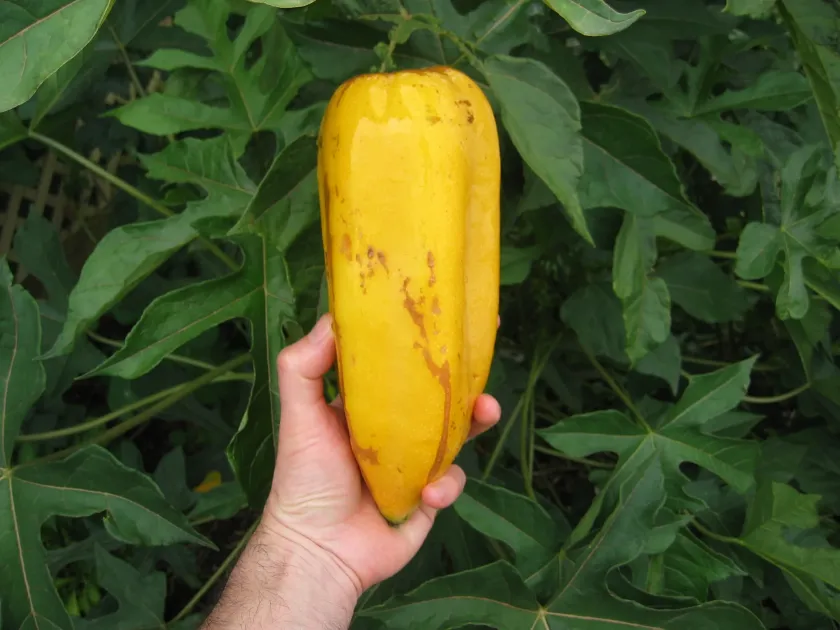
The fruits feature a distinctive pentagonal shape, typically measuring 20-30 centimeters in length and weighing between 500 grams and one kilogram. They are hollow, seedless, and offer a succulent flesh with a flavor profile reminiscent of pineapple, strawberry, and kiwi.
To maximize yields, growers should remove excess shoots and maintain only the most vigorous stems. This strategy reduces stress on the root system and directs the plant's resources toward producing larger, high-quality fruits.
Total production is highly dependent on light intensity and nutrient availability. Yields in greenhouse conditions are generally higher due to the controlled, stable environment that minimizes physiological stress.
The productive lifespan of an individual plant is approximately 5 to 7 years. After this period, vitality decreases, and it is recommended to replace aging shrubs with new, propagated clones.
Main diseases and pests
The primary threats to babaco are fungal diseases, such as root rot and phytophthora, which occur in poorly drained soil or through overwatering. Standing water is the most significant hazard to the plant's health.
Common pests include spider mites and whiteflies, especially in greenhouse environments with low humidity. These pests can be managed using appropriate systemic or contact insecticides and miticides.
Scale insects and mealybugs can also infest the foliage and young shoots, weakening the plant by extracting sap. Regular monitoring allows for early intervention, which prevents severe infestations.
Any mechanical damage to the roots during soil work can provide an entry point for soil-borne pathogens. Therefore, all maintenance around the root zone should be performed with extreme caution.
Adhering to strict agricultural practices, especially regarding sanitation and irrigation, is the most effective way to prevent the spread of diseases and maintain a healthy crop.
Harvesting
Harvesting babaco requires a gentle touch because the fruit has a thin, delicate skin that bruises easily. Fruits should be picked once they reach a uniform yellow color.
Fruits can be harvested slightly early for ripening off the plant, although the flavor quality is superior when allowed to ripen fully on the shrub. They should be clipped with sharp shears, retaining a small portion of the stem.
Freshly harvested babaco has a limited shelf life and should be consumed within a week. For better longevity, fruits should be stored in a cool place with temperatures between 8 and 10 degrees Celsius.
Transportation requires soft protective packaging to prevent dents or skin damage. In commercial production, gentle handling during the logistics phase is essential to maintain fruit quality.
Babaco is primarily consumed fresh, used in desserts, or processed into juices and candied fruit. Due to its high papain enzyme content, the fruit is also used in culinary applications to tenderize meat.