
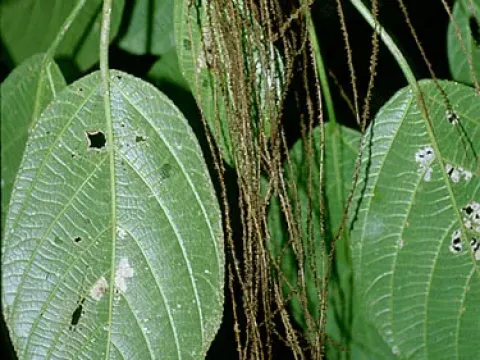
Myriocarpa
Myriocarpa
Myriocarpa is a genus of plants belonging to the Urticaceae family. These plants are typically shrubs or small trees native to the tropical regions of Central and South America.
What the section contains

Myriocarpa
In cultivation, seeds are sown in fine, peat-based sterile substrates. Given their small size, seeds should be sown on the surface and pressed lightly without heavy covering.
Germination requires a humid environment and constant temperatures of approximately +25 degrees Celsius. Mist spraying helps maintain necessary humidity levels during the initial growth phase.
Seedlings should be kept in shaded areas to prevent drying out and damage from intense light. As they develop, they are gradually transitioned to brighter, diffused light conditions.
Transplanting to individual containers is recommended once the first true leaves have fully formed to ensure sufficient root space for the young shrubs.
Myriocarpa thrives in high-humidity environments typical of tropical rainforest understories. It requires consistent warmth and protection from cold drafts or temperature drops.
The soil should be nutrient-rich, porous, and well-draining. A mix of peat, perlite, and leaf mold is ideal for providing the necessary aeration and moisture retention.
Diffuse light is crucial; direct sunlight can scorch the foliage. Placing the plant in a bright location without direct exposure ensures optimal photosynthetic activity.
Regular watering is necessary, especially during the active growing season. The soil must remain slightly moist, but standing water in the drainage tray should be avoided.
Fertilization with a balanced, water-soluble fertilizer every two weeks promotes vigorous leaf growth and strong stem development throughout the warmer months.
Spider mites are the most common pest, especially in indoor environments where air humidity might drop below optimal levels for the plant.
Fungal infections, including powdery mildew, can manifest as white spots on the leaves, usually resulting from poor air circulation and excessive moisture on the foliage.
Root rot is a critical threat caused by overwatering or poorly drained containers. It typically manifests as wilting despite moist soil, often signaling decay at the roots.
Monitoring for whiteflies and aphids is also important, as these insects can quickly colonize the underside of leaves and weaken the plant's immune system.
Integrated pest management, including regular inspection and the use of insecticidal soaps, is the most effective approach to maintaining plant health.