
Myriocarpa longipes
Myriocarpa longipes
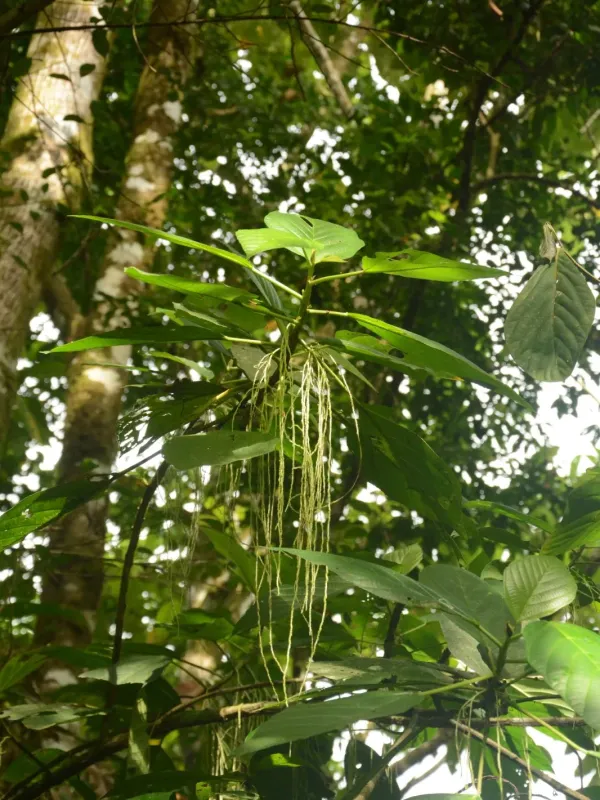
Description
Growing requirements
Myriocarpa longipes is a distinctive shrub or small tree belonging to the family Urticaceae. Native to the humid rainforests of Central and South America, it occupies a specialized ecological niche in the forest understory, thriving in sheltered and moisture-rich environments.
Botanically, this species is noted for its elongated, hanging inflorescences which provide a unique aesthetic quality. The leaves are typically broad and alternate, featuring the characteristic venation patterns found in members of the nettle family. It is a perennial plant that maintains a persistent green canopy.
Successful cultivation of this species depends on mimicking its natural tropical habitat. It requires consistently warm conditions, typically between 20°C and 28°C, and cannot tolerate frost or prolonged drought. In non-tropical regions, it is almost exclusively grown in climate-controlled greenhouses.
The soil requirements involve a well-draining, nutrient-rich substrate, preferably slightly acidic to neutral. Peat-based mixes with added perlite or bark are recommended to ensure good aeration for the root system, preventing the common issue of suffocation during periods of high humidity.
Regarding its utility, the primary focus is ornamental and botanical interest rather than industrial production. While some plants in the Urticaceae family are known for fiber production, Myriocarpa longipes is valued mainly for its unique floral displays and educational importance in botanical collections.
Main diseases and pests
The health of the plant is primarily threatened by fungal pathogens such as Pythium and Phytophthora, which thrive in soggy, poorly aerated soil. Common pests include spider mites and mealybugs, which tend to congregate on the undersides of the leaves, requiring constant vigilance and integrated management.