

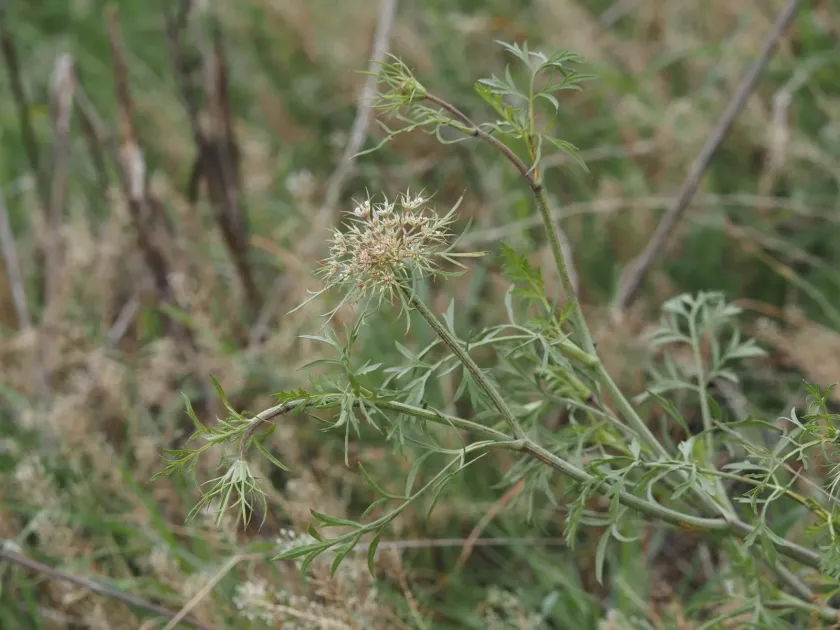
Description
Sowing dates
Carrot (Daucus carota L.) is a prominent biennial plant belonging to the Apiaceae family. While it naturally completes its life cycle over two years, commercial growers cultivate it as an annual crop to maximize the quality and size of the taproot, which is the primary economic component.
Sowing schedules are determined by the intended harvest period. Early season cultivation requires soil temperatures to reach at least 5 degrees Celsius for germination. For winter storage varieties, sowing typically occurs in late spring to ensure the crop matures before the onset of autumn frosts.
Growing requirements
The plant thrives in deep, loose, and friable soils. Sandy loams are considered ideal as they allow for unobstructed root development. Compact or stony soils must be avoided, as they inhibit taproot elongation and frequently result in deformed, unmarketable produce.
Adequate water supply is crucial throughout the growing season. While the crop requires consistent moisture to ensure uniform germination and root expansion, excessive water fluctuations should be avoided to prevent splitting, which is a physiological disorder often triggered by uneven hydration.
Effective nutrient management is essential for high-quality yields. Nitrogen, phosphorus, and potassium should be applied based on soil analysis results. Excessive nitrogen can lead to rapid foliage growth at the expense of root development and may negatively affect the long-term storage quality of the crop.
Main diseases and pests
The carrot rust fly (Psila rosae) remains the most significant pest affecting commercial carrot production. Larvae cause extensive damage by burrowing into the roots, making them susceptible to secondary infections and rendering the crop unmarketable. Integrated Pest Management (IPM) strategies, including rotation and netting, are vital.
Fungal diseases such as Cavity Spot, caused by Pythium species, pose a significant threat to root quality. These pathogens flourish in waterlogged conditions. Preventive measures include maintaining proper soil drainage and choosing resistant cultivars to minimize infection risk during the development phase.
Harvesting
Harvesting should be timed to avoid freezing temperatures, which can damage the upper portion of the roots. Once harvested, it is essential to minimize soil moisture loss. Proper post-harvest handling, including cooling and controlled storage temperatures, is critical for maintaining market quality.
In brief
1
Crop pests
Content graph
Crop pests · 1
Content graph
Connections · Carrot
Most often together:
Marketplace
Products · 418
All 418
Herbicides, Desiccants 248
Carrot 103
Fungicides 27
Fertilizers 26
Plant Growth Regulators 9
Insecticides, Acaricides 4
Adjuvants/Surfactants 1


Targa Super, KE, herbicide
Nissan Chemical Corporation, LLC
Herbicides
0
0
·
110
No offers
—
Details


Pro-Star 500 SC, KS
Zhejiang Zhongshan Chemical Industry Group Co., Ltd.
Herbicides
0
0
·
67
No offers
—
Details


REYSER K.E.
F.A.GAN Chemical Manufacturers Ltd. Israel, member
Herbicides
0
0
·
62
No offers
—
Details

PRO-STAR 500 SC
Zhejiang Zhongshan Chemical Industry Group Co., Ltd.
Herbicides
0
0
·
62
No offers
—
Details

TERAMETRIN
Шаньдун Чіаочан Кемікал Ко. Лтд. (SHANDONG QIAOCHANG CHEMICAL CO., LTD)
Herbicides
0
0
·
62
No offers
—
Details


Segment, CS, (Prometryn, 500 g/l)
Три Дельта Компані Інтернешнл, Гонконг, Китай.
Herbicides
0
0
·
57
No offers
—
Details

Oreol c.e., Herbicide (Hizalophop-P-ethyl 50 g/l)
Unicity Enterprises L.P.
Herbicides
0
0
·
56
No offers
—
Details

SEGMENT, K.S.
Три Дельта Компані Інтернешнл, Гонконг, Китай.
Herbicides
0
0
·
56
No offers
—
Details


Prosan 50 SC
F.A.GAN Chemical Manufacturers Ltd. Israel, member
Herbicides
0
0
·
55
No offers
—
Details

Innoparmis Agrosains / Nano Chelate Fertilizer Enriched Iron 10%
FanAvar Sepehr Parmis, Іран.
Fertilizers
0
0
·
54
No offers
—
Details

Parity, CS (permethrin, 500 g/l)
«Нанджин Ессенс Файн-Кемікал Ко. Лтд» (Китай)
Herbicides
0
0
·
54
No offers
—
Details

Select® 120, KE (clethodim, 120 g/l)
«Аріста ЛайфСайенс С.А.С.» , Франція
Herbicides
0
0
·
54
No offers
—
Details