
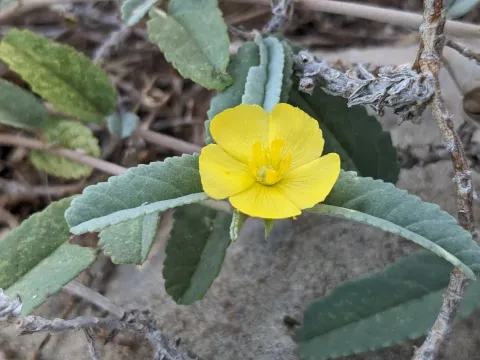
Melhania
Melhania
Sowing of Melhania seeds is conducted in the spring period when the soil warms up sufficiently and the risk of nocturnal frosts has passed. To ensure uniform germination, it is necessary to maintain an optimal temperature range between 20 and 25 degrees Celsius.
What the section contains


Melhania
When using seed material on an industrial scale, pre-sowing scarification of the seed coat is recommended to accelerate germination. Sowing is carried out in rows with spacing that allows for mechanical soil cultivation.
The planting depth of the seeds should not exceed 1–2 centimeters, which is dictated by their small size. The optimal planting density is selected depending on the objective of cultivation — whether for seed production or for harvesting green mass.
An important factor during sowing is substrate moisture, which must be maintained at a level above average for the first two weeks post-sowing. Desiccation of the topsoil during this period can lead to seedling failure.
Young Melhania plants develop relatively slowly in the first weeks of life, so it is critical to perform timely weeding. This allows the crop to establish itself and develop a robust root system.
Melhania belongs to the Malvaceae family and represents a genus of perennial herbaceous plants and shrubs adapted to the arid conditions of tropical and subtropical zones in Africa and Asia.
The plant demonstrates high tolerance to moisture deficit, making it a promising candidate for cultivation in arid climate regions. It prefers well-drained sandy or sandy-loam soils with a neutral or slightly alkaline pH.
The crop is extremely heliophilic and requires full sun exposure throughout the day. In shaded areas, growth intensity significantly decreases, and stems become elongated, which reduces the quality of the resulting biomass.
In its natural habitat, Melhania withstands significant diurnal temperature fluctuations. However, in industrial cultivation, one should avoid plots with standing water, which triggers the development of root rots.
Agronomic techniques include moderate irrigation during the active growth phase and the application of phosphorus-potassium fertilizers to stimulate flowering and strengthen plant immunity. An excess of nitrogen fertilizers can lead to reduced drought resistance.
Typical pests for Melhania include members of the Hemiptera order, such as aphids and spider mites, which feed on the cellular sap of young leaves. In cases of massive infestation, the application of biological insecticides is recommended.
Fungal diseases, including powdery mildew, most often occur under high air humidity and poor air circulation. Affected parts require immediate sanitary pruning to prevent the spread of spores.
Root rots are the most dangerous diseases developing during disturbances in drainage regimes. Effective prevention lies in controlling irrigation and utilizing loose soil mixtures.
Nematodes can infest the root system of Melhania in warm climates, especially in light soils. Crop rotation involving cereal crops helps reduce the pathogen load in the soil.
Disease management must be comprehensive, combining agronomic practices with the use of fungicides upon the appearance of initial infection signs. It is crucial to monitor the cleanliness of seed material prior to sowing.