
Melhania denhamii
Melhania denhamii
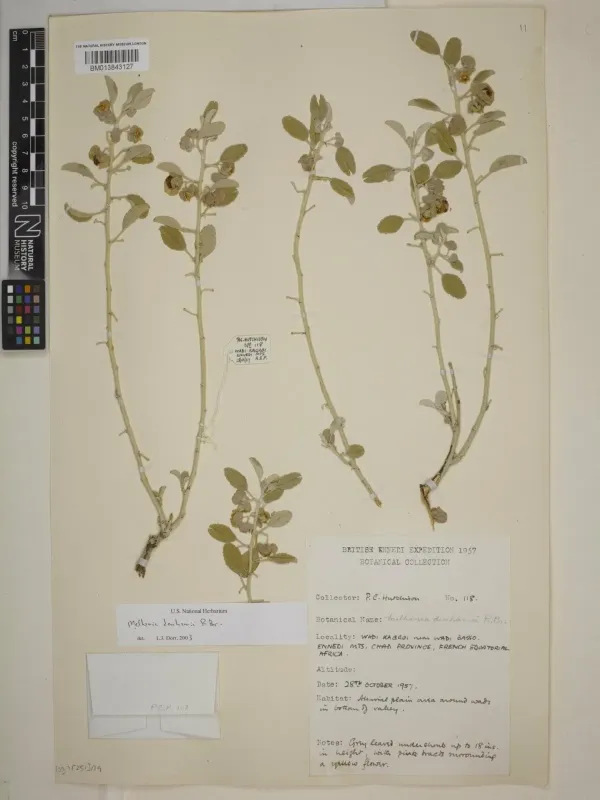
Description
Sowing dates
Melhania denhamii belongs to the Malvaceae family, characterized by its resilience in harsh, arid, and semi-arid environments. It is a perennial herbaceous plant or small shrub typically found in dry savannas and regions with seasonal rainfall patterns.
Sowing should be performed when the soil temperature has stabilized at a warm level, ideally matching the onset of the rainy season in its native range. Early establishment is crucial for the plant to develop its deep root system before the peak heat of the season.
The seeds should be planted at a shallow depth of approximately 1–2 cm. Proper contact with the soil is essential, and light irrigation during the initial germination phase can significantly increase the percentage of successful establishment.
In row-based cultivation, maintaining adequate spacing is recommended to prevent competition for light and water. As a drought-tolerant species, Melhania denhamii exhibits vigorous initial growth when conditions are favorable.
The botanical structure allows for efficient utilization of limited moisture, and once the seedling phase is passed, the plant displays a high level of survival in water-scarce environments without additional human intervention.
Growing requirements
Melhania denhamii thrives in well-drained sandy and loamy soils. It has a high tolerance for poor soil quality and can perform well on marginal lands where other crops would fail to establish due to low nutrient availability.
Full sunlight is a critical requirement for this species. It is not suitable for shaded areas, as low light intensity leads to stunted growth and reduced leaf production. Good airflow around the plant is also essential to prevent moisture-related diseases.
The plant is highly adaptable to a range of pH levels, typically preferring neutral to slightly alkaline conditions. It is known to tolerate moderate salinity levels, making it a potential candidate for rehabilitating degraded agricultural lands.
Water management is the most important aspect of its cultivation. While the mature plant is extremely drought-resistant, excessive water or poor soil drainage will lead to root rot and complete loss of the crop.
Regular monitoring of the soil moisture profile is recommended to ensure that the ground does not stay waterlogged after heavy rains. Given its origins, it performs best under high temperatures and wide daily temperature fluctuations.
Main diseases and pests
Root rot caused by fungal pathogens is the primary threat to Melhania denhamii. This occurs almost exclusively when the soil is kept too wet, highlighting the importance of site selection and soil texture for long-term survival.
Powdery mildew can affect the foliage in conditions of high humidity or poor ventilation. Implementing appropriate row spacing helps to maintain a microclimate that inhibits the growth of these fungal spores.
Insects, particularly those that feed on tender stems and young leaves, can occasionally cause damage. Monitoring populations during the early growth stages is necessary to determine if intervention is required.
Crop protection strategies should prioritize integrated pest management, avoiding broad-spectrum pesticides that could negatively impact local ecosystems. Maintaining plant health through proper spacing is the best defense against pests.
Viral infections can sometimes impact yield and plant vigor, often transmitted by sap-sucking insects. Using certified seed and ensuring fields are kept free from alternate weed hosts are effective preventive measures.