
Melhania forbesii
Melhania forbesii
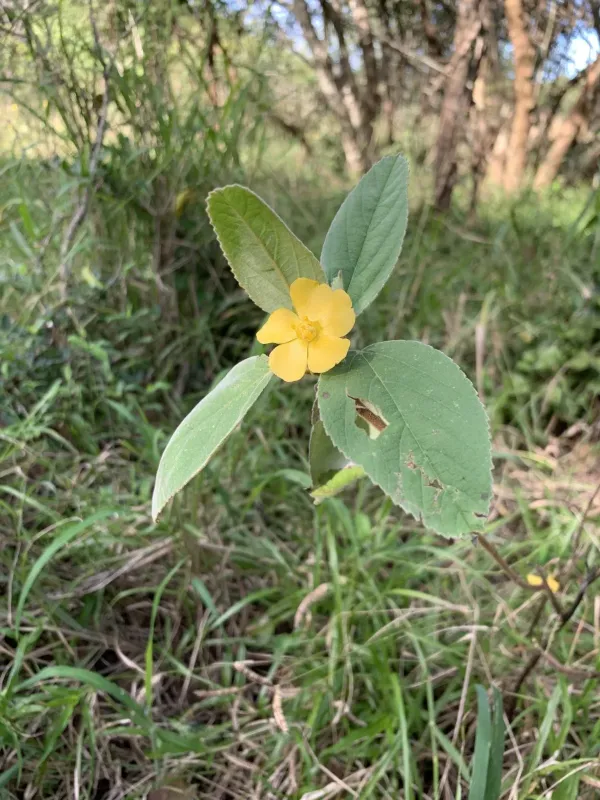
Description
Growing requirements
Melhania forbesii is a perennial herbaceous plant belonging to the Malvaceae family. It is native to tropical Africa and parts of the Arabian Peninsula, where it has evolved to thrive in harsh, semi-arid environments characterized by significant water scarcity.
Botanically, this species is well-adapted to high heat and intense light conditions. Its leaves are often densely pubescent, which serves as a protective mechanism to reduce transpiration rates and retain moisture during peak daytime heat.
The crop demands well-drained soils to prevent root rot, which is the most significant limiting factor for its cultivation. Sandy loams and well-structured, porous soils provide the best environment for the development of its primary taproot system.
It performs best in full sunlight, with temperatures ranging from 25 to 35 degrees Celsius. The crop is strictly frost-intolerant, meaning it cannot survive in temperate zones without controlled greenhouse environments.
Agronomic management requires minimal irrigation once the plants are established. Weed control is essential during the early stages of growth, as the crop's slow initial development makes it susceptible to competition from fast-growing weeds.
Harvesting
In agricultural practice, Melhania forbesii is primarily utilized as a forage resource for livestock. It remains palatable during the vegetative growth phase, providing essential nutrients in regions where high-quality pasture is scarce.
Harvesting is typically performed via manual or mechanical cutting. Timing is critical: it must be harvested before the lignification of the stems to ensure maximum nutrient density and digestibility for the consuming animals.
Once harvested, the material can be processed as hay or silage. Due to its potential for high fiber content at maturity, moisture management during the drying process is vital to maintain quality and prevent fungal contamination.
Seed harvesting requires careful timing, as the capsules are prone to dehiscence upon drying. Seeds should be collected immediately after maturity to avoid significant yield losses on the field.
The plant also serves an ecological role in land rehabilitation. Its deep root system aids in soil stabilization, making it a potential candidate for reforestation and erosion control programs in degraded dryland ecosystems.