
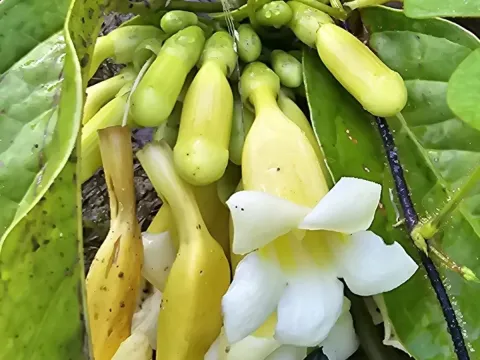
Lundia
Lundia
Lundia is a genus of evergreen woody vines belonging to the Bignoniaceae family. These plants are recognized for their robust growth habits and their ability to climb structures using specialized tendrils that act as anchoring mechanisms.
What the section contains
Lundia
Originating from the tropical regions of Central and South America, Lundia thrives in humid forest environments. Its natural habitat provides the high moisture levels and consistent temperatures necessary for the plant to maintain its evergreen foliage throughout the year.
The botanical structure of the vine features compound, opposite leaves with terminal tendrils. These adaptations allow the plant to secure itself firmly to tree trunks and branches in the wild, or to trellises and pergolas when cultivated in gardens.
The plant has strict climate requirements, primarily focusing on its lack of frost tolerance. It thrives in tropical zones with temperatures ranging between 22 and 28 degrees Celsius, requiring a sheltered environment if cultivated in subtropical areas.
For optimal health, Lundia needs well-draining, nutrient-rich soil. While the plant appreciates consistent moisture, it is sensitive to waterlogging, making proper drainage of the planting site or container essential for root health.
The primary use of Lundia is ornamental. Due to its rapid growth and beautiful flowers, it is widely utilized for vertical landscaping and covering large garden structures in regions with favorable, frost-free climates.
Cultural practices include regular fertilizing during the active growing season. A balanced approach using organic compost or water-soluble fertilizers helps support the development of extensive greenery and, subsequently, the production of showy inflorescences.
Propagation is generally performed through stem cuttings. This method is preferred in nurseries because it allows for the cultivation of genetically identical specimens that exhibit the desirable flowering traits of the parent plant.
Maintenance pruning is vital for managing the plant's aggressive growth. Without structural pruning, the heavy weight of the vine can potentially damage supports or crowd out smaller vegetation in the surrounding garden area.
Pest management is an important aspect of the cultivation cycle. Gardeners should regularly inspect the plant for common tropical pests, such as aphids or mealybugs, and apply appropriate biological or chemical controls to preserve the plant's health and aesthetic appeal.