
Jacaranda caucana
Jacaranda caucana
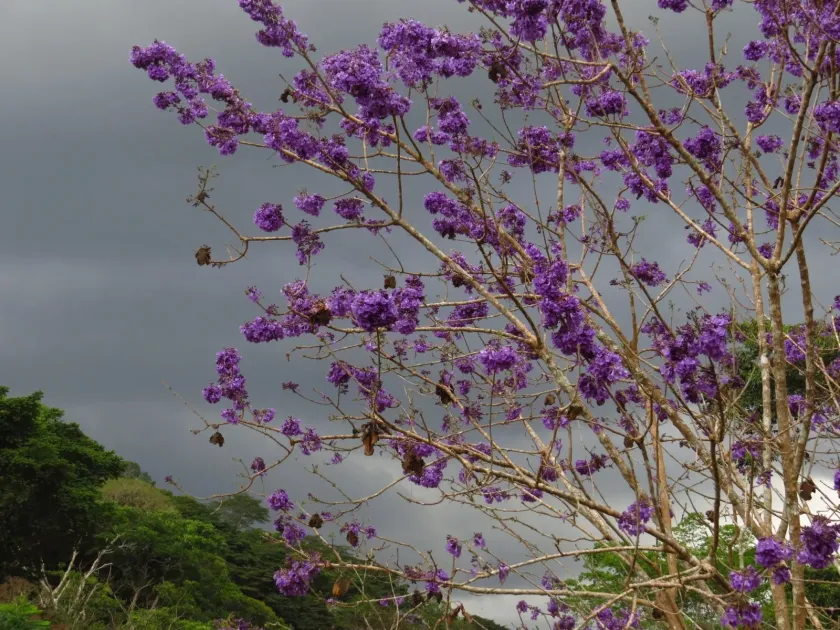
Description
Growing requirements
Jacaranda caucana is a remarkable tree belonging to the Bignoniaceae family. It is native to the tropical regions of South America, specifically thriving in the river valleys of Colombia and neighboring areas.
The plant requires a strictly tropical climate with consistent temperatures. It is highly sensitive to frost and cold winds, which makes it suitable only for regions that remain warm throughout the entire year.
Agricultural success with this species depends heavily on soil quality. It prefers fertile, well-draining substrates. Waterlogging must be strictly avoided to prevent root rot and ensure the tree remains healthy and productive.
Light availability is another critical factor. Jacaranda caucana requires full sun exposure to flourish and produce its signature blossoms. Inadequate lighting results in poor foliage density and a complete lack of reproductive growth.
The primary use of this species is ornamental landscaping in parks and urban settings. Besides its visual value, the wood is sometimes utilized in local craft and furniture production due to its specific texture and durability.
Main diseases and pests
Fungal infections of the root system represent the most significant threat to the health of the tree, usually caused by improper irrigation practices or poor soil drainage in the planting area.
Pests such as aphids and scale insects are frequently observed on younger specimens. These pests suck sap from the foliage, leading to premature leaf drop and the potential for secondary viral infections.
Integrated pest management is recommended for maintaining healthy stands of this culture. Monitoring for early signs of infestation allows for targeted interventions rather than blanket chemical applications.
Proper crown management through pruning is essential to improve airflow. By thinning the dense canopy, growers can significantly reduce the micro-environment humidity that favors fungal spore development.
Maintaining balanced nutrition is also key. Over-fertilization, especially with high-nitrogen blends, can result in excessively soft growth that becomes highly attractive to leaf-eating larvae and other damaging insects.