
Showy lily
Lilium speciosum Thunb.
Description
Growing requirements
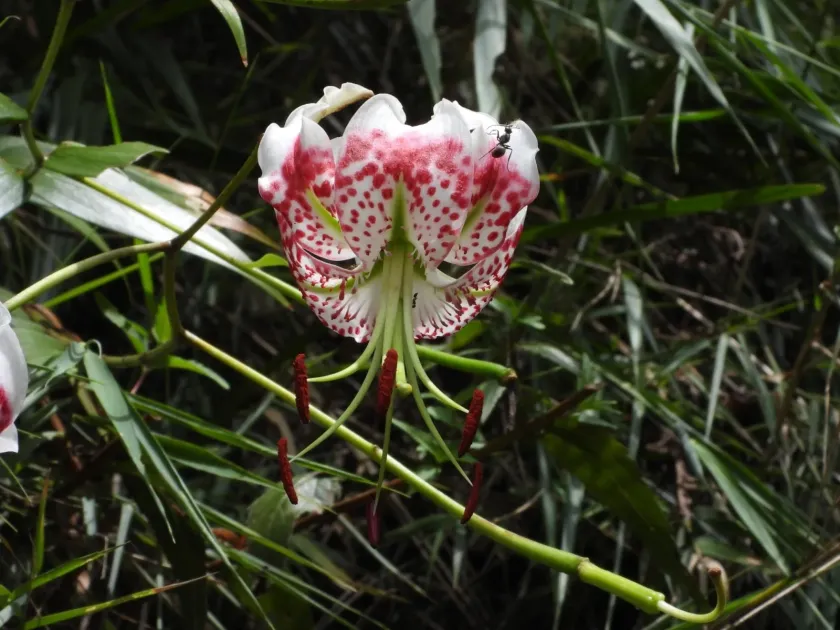
The Showy lily (Lilium speciosum) is a perennial bulbous plant belonging to the Liliaceae family. Native to Japan, Taiwan, and parts of China, it is highly valued for its large, fragrant flowers with recurved petals that bring beauty to any temperate garden landscape.
The plant thrives in well-drained, slightly acidic soils rich in leaf mold and organic matter. Ensuring adequate drainage is paramount, as waterlogged conditions in the root zone can be fatal to the bulbs during the dormancy period or early spring growth.
Regarding climatic needs, Lilium speciosum prefers sheltered locations with partial shade. In the wild, it grows in wooded areas where the soil remains cool, but the foliage can reach dappled sunlight, which is an ideal condition for its development.
Cultivation in cold regions requires specific care; in areas with harsh winters, bulbs should be planted deep and covered with thick organic mulch. Alternatively, in northern climates, gardeners often treat them as pot plants to control the thermal environment.
In commercial agriculture, the species is primarily grown for the floral industry. Its structural strength and long vase life make it a premium product for high-end arrangements, though it requires precise humidity and light management in greenhouse settings.
Main diseases and pests
Botrytis blight is the most common fungal issue for this species, especially during humid weather. It manifests as small brown spots on leaves and flowers, which can spread rapidly if the air circulation around the plants is poor.
Fusarium basal rot is another critical pathogen that attacks the base of the bulb. Once the rot takes hold, the plant loses its ability to absorb nutrients, and usually, the only effective management strategy is to remove and destroy the infected bulb.
The lily beetle is a significant insect pest that feeds on all parts of the foliage. Without regular scouting and intervention with systemic insecticides, the beetle population can defoliate the plants, preventing them from storing energy for the following year.
Viruses are a major concern for lily producers, often spread by aphids that act as vectors. Symptoms include stunted growth and chlorotic patterns on leaves, necessitating strict sanitation practices and control of insect vectors.
Root-feeding nematodes and bulb mites can severely weaken the plant by causing mechanical damage to the bulb scales. This damage often serves as an entry point for secondary bacterial infections that lead to rapid decay of the entire plant.