
Madonna lily
Lilium candidum L.
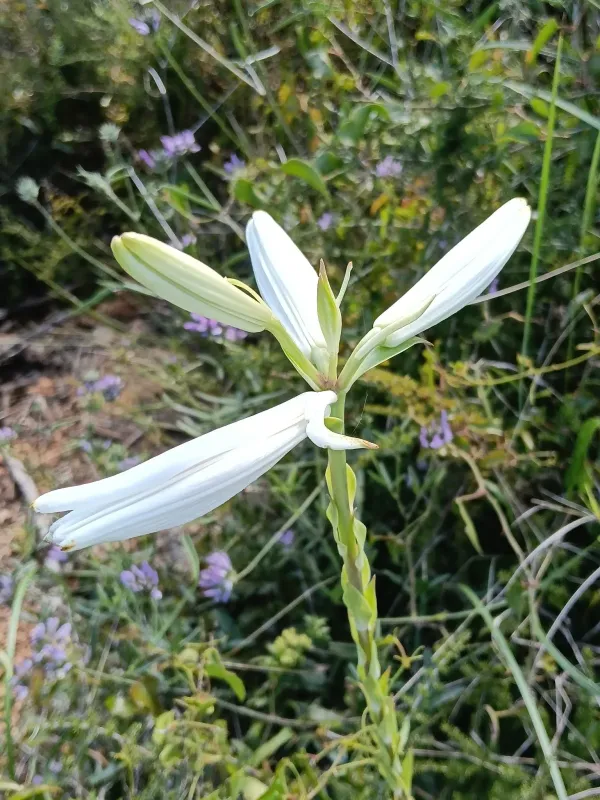
Description
Sowing dates
The Madonna lily (Lilium candidum) is a perennial bulbous plant belonging to the Liliaceae family. It exhibits a unique life cycle compared to other lilies: it enters a dormancy phase in mid-summer and begins producing a basal rosette of leaves in August, which persists throughout the winter.
Planting and transplanting should be performed strictly during the short dormancy period, typically between August and early September. Delaying planting results in the plant failing to develop the necessary leaf rosette before winter, which significantly reduces its cold tolerance.
Bulbs must be planted at a shallow depth of only 3–5 cm from the top of the bulb to the soil surface. This is a fundamental requirement, as the Madonna lily produces only basal roots, unlike other lily species that generate stem roots above the bulb.
Select a location with full sun exposure and protection from strong winds. Because the plant is sensitive to waterlogging, it is essential to provide a well-draining soil structure, especially in heavier clay soils, using sand or gravel as a base.
A spacing of 25–30 cm between bulbs is recommended. Adequate spacing is crucial for proper airflow around the leaf rosette, which helps prevent the development of moisture-related fungal infections.
Growing requirements
This species has specific soil requirements. Unlike many other lilies, the Madonna lily thrives in neutral to slightly alkaline, lime-rich soils that are fertile and contain high levels of organic matter.
While the plant needs moderate moisture during the spring and autumn growing seasons, it requires a dry soil environment during its summer dormancy. Excessive water during this phase can easily lead to bulb rot and the loss of the plant.
The application of wood ash is highly beneficial, as it helps stabilize the soil pH and provides essential potassium. It is advisable to avoid excessive nitrogen-based fertilizers, as they can weaken the plant tissue and attract pests.
In regions with harsh winters, providing winter protection is recommended. A layer of mulch or coniferous branches can shield the evergreen leaf rosette from freezing temperatures and mechanical damage caused by ice or heavy snow.
Light levels are vital for the development of healthy flower stalks. Insufficient sunlight will cause the plant to become etiolated and weak, leading to smaller, less vibrant flowers and a decline in bulb vigor over successive seasons.
Main diseases and pests
Botrytis, commonly known as gray mold, is the primary threat to this species, especially in damp and cool weather conditions. Preventive measures include ensuring good ventilation and avoiding overhead irrigation to keep the foliage dry.
Fusarium wilt is a common concern affecting the bulb base, often triggered by poor drainage or the use of contaminated planting material. Maintaining strict soil hygiene and using sterilized tools are the best strategies to prevent its spread.
The lily beetle (Lilioceris lilii) is the most destructive pest, capable of consuming significant foliage and floral tissue. Regular inspection and the use of targeted insecticides are necessary to maintain plant health throughout the season.
Subterranean pests such as wireworms and larvae of the European chafer can damage the bulbs. Incorporating soil-applied treatments at the time of planting provides an effective barrier against these underground threats.
Viral diseases, such as lily mosaic virus, are incurable and are transmitted via sap during handling. Thoroughly sanitizing tools between plants is a mandatory practice for gardeners to prevent cross-contamination.
Harvesting
The Madonna lily is primarily cultivated for ornamental purposes in landscapes and, to a lesser extent, for the extraction of essential oils in the perfume industry. Stems are harvested when the buds are partially open to maximize vase life.
Propagation is achieved by dividing the bulbs after the growing season. This must be done with extreme care to maintain the integrity of the bulb scales, which are essential for producing offsets.
Once lifted, bulbs should be cleaned, treated with a fungicide, and dried in a cool, shaded area. Since these bulbs lack the protective tunic found in other species, they are prone to desiccation and must be replanted as quickly as possible.
Production yields are highly dependent on soil fertility and irrigation management. A single planting site can remain productive for up to five years, after which the soil usually requires replenishment or site rotation.
For industrial use, petals are harvested in the early morning hours. This timing is critical, as it ensures the highest concentration of volatile aromatic compounds before they are dissipated by the heat of the sun.