
Hanson's lily
Lilium hansonii Leichtlin ex D. D. T. Moore
Description
Growing requirements
Hanson's lily (Lilium hansonii) is a perennial bulbous plant belonging to the Liliaceae family. It is a distinctive member of the Martagon group, valued by horticulturists for its sturdy nature and ability to thrive in partial shade conditions.
Originating from the Korean Peninsula and Japan, this species is well-adapted to forest environments. In agricultural settings, it requires a location that mimics its native habitat, offering dappled light and cool soil temperatures throughout the growing season.
The ideal soil for this lily is rich in organic matter, slightly acidic to neutral, and possesses excellent drainage capabilities. Unlike many other lily varieties, it performs exceptionally well in heavy soils if they are properly amended with compost or leaf mold.
Agronomic management involves planting the bulbs at a depth of 15–20 cm to ensure the roots remain cool during summer heatwaves. Once established, the plants are remarkably long-lived and benefit from minimal soil disturbance over the years.
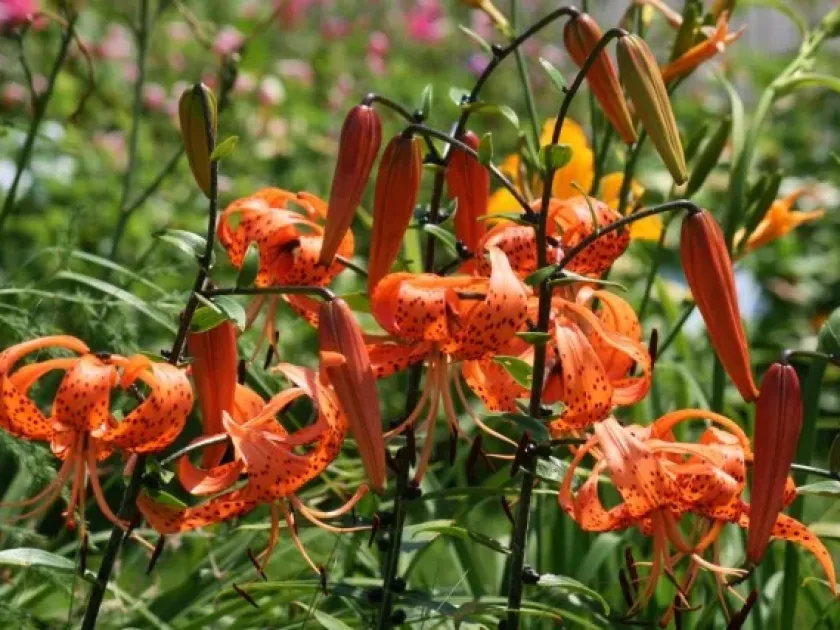
Botanically, the species is characterized by its whorled foliage and thick, golden-yellow to orange reflexed petals, often featuring subtle brown speckling. The stalks can grow quite tall, sometimes reaching 1.5 meters, requiring sheltered spots away from strong winds.
Main diseases and pests
The lily beetle (Lilioceris lilii) is the primary insect threat. If left unmanaged, these beetles can skeletonize the entire foliage, causing significant stress to the bulbs and reducing the potential for the following year's blooms.
Botrytis blight is a frequent fungal pathogen that affects the foliage during prolonged wet and humid weather. Ensuring adequate plant spacing and proper sanitation in the garden helps maintain good air circulation, significantly reducing the risk of fungal outbreaks.
Bulb rot, often caused by poor drainage, can lead to the total loss of the plant. It is essential to monitor soil moisture levels and ensure that the bulb area does not become waterlogged, especially during the dormant winter period.
Viral infections, which cause mottling and distorted growth, represent a serious challenge. These are often transmitted by aphids, which must be controlled early in the season to protect the health of the entire collection.
To enhance plant resistance, it is advised to apply balanced organic fertilizers and maintain a layer of mulch around the base of the plant. This practice preserves soil moisture and temperature, fostering a robust root system that better withstands environmental stresses.