
David's lily
Lilium davidii Duch.
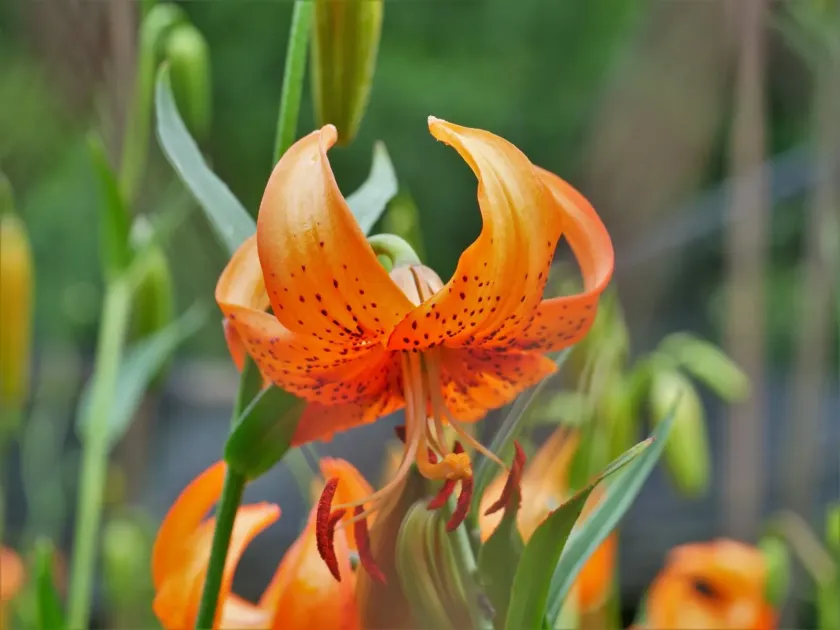
Description
Sowing dates
David's lily (Lilium davidii) is a perennial bulbous plant belonging to the Liliaceae family. In agricultural and ornamental practice, it is primarily propagated through the division of bulb scales or offsets produced by the parent bulb.
The optimal planting time is early autumn, which allows the root system to establish before the onset of soil freezing. This promotes early spring growth and more vigorous flower development during the main season.
Spring planting is also viable, particularly in colder climatic zones where late frosts could damage new sprouts. In such cases, bulbs should be planted as soon as the soil is workable and free of frost.
When planting, it is critical to ensure proper spacing to account for the natural expansion of the bulb cluster. A distance of 25–30 cm between bulbs is recommended to ensure adequate nutrient access and air movement.
The depth of planting should generally be 15–20 cm. Since this species develops stem roots above the bulb, deeper planting encourages a larger root system, which improves overall plant stability and nutrient uptake.
Growing requirements
This species thrives in well-drained, fertile soil that is rich in organic matter. While it is adaptable, it performs best in soils with a neutral to slightly acidic pH, avoiding areas that remain waterlogged for extended periods.
David's lily requires a sunny location to reach its full height and flowering potential. However, it benefits from having its roots shaded, which can be achieved by planting low-growing companion plants around the base.
Climate adaptability is one of the strengths of Lilium davidii, as it is native to mountainous regions of China. It is relatively cold-hardy, provided that the soil drainage is sufficient to prevent winter rot.
Regular maintenance involves keeping the soil moist but never soggy. During the peak of the growing season, a balanced application of fertilizer can support the development of its signature pendant, orange-spotted flowers.
Mulching is a highly recommended practice for this culture. A layer of organic mulch helps retain soil moisture, suppresses weed growth, and keeps the soil temperature stable during the heat of summer.
Main diseases and pests
The most significant pathological threat to David's lily is Botrytis blight (gray mold), which is favored by cool, damp weather conditions. This pathogen attacks leaves and stems, requiring immediate sanitation and fungicide intervention.
Lily beetles are the primary insect pest, capable of defoliating the entire plant within a short time. Regular monitoring and manual removal, or the use of targeted insecticides, are necessary to maintain plant vigor.
Fusarium wilt is a serious soil-borne disease that affects the bulb and roots. It leads to yellowing foliage and subsequent wilting, often requiring the total removal of the affected bulb and surrounding soil to prevent spreading.
Prevention is the cornerstone of successful management for this species. Using healthy planting stock, ensuring good airflow, and rotating planting locations can significantly reduce the risk of outbreaks.
Good horticultural practice includes proper storage and preparation of bulbs before planting, such as inspecting them for lesions or rot and applying appropriate protective treatments to minimize disease pressure.