
Goldband lily
Lilium auratum Lindl.
Description
Growing requirements
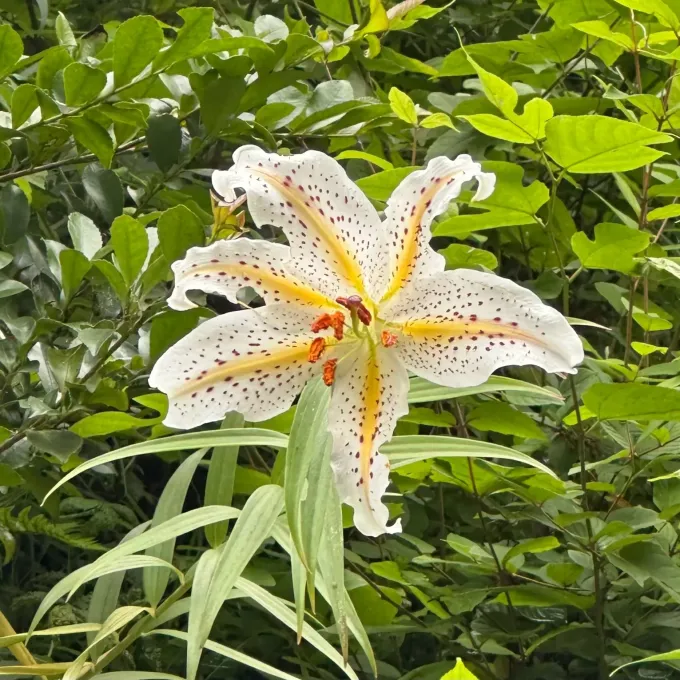
The Goldband lily (Lilium auratum Lindl.) is a prominent species in the Liliaceae family. Native to Japan, this plant naturally thrives in woodland edges and mountain slopes, where it benefits from high humidity and excellent drainage.
Successful cultivation requires specific soil conditions. The ideal substrate is slightly acidic, rich in leaf mold or organic matter, and must have perfect drainage to prevent bulb rot. This species is notoriously sensitive to heavy, waterlogged soils.
Regarding climate, the plant prefers cool, moist root zones combined with bright, filtered sunlight. Excessive heat at the root level can stress the plant, so covering the base with low-growing companion plants or mulch is a standard recommended practice.
Agrotechnical care involves consistent moisture management throughout the growing season. Avoiding overhead watering is critical, as wet foliage significantly increases the risk of fungal infections in the flower and leaf tissues.
The primary use of Lilium auratum is in ornamental horticulture. Its large, fragrant flowers with a distinctive gold band make it a prized specimen for luxury gardens and high-end floral exhibitions, as well as a cornerstone for breeding Oriental hybrid lilies.
Main diseases and pests
The most significant pathological threats are fungal diseases such as Botrytis elliptica (gray mold) and Fusarium oxysporum (basal rot). These diseases are exacerbated by poor air circulation and high humidity levels in the growing area.
Viral infections, particularly the lily mosaic virus, are devastating and incurable. Prevention is the only strategy, which involves controlling aphid populations that act as vectors and strictly adhering to sanitation protocols during handling.
The lily beetle (Lilioceris lilii) is the most destructive insect pest. Both the larvae and adults feed aggressively on leaves and stems, requiring proactive scouting and the application of targeted insecticides to prevent severe plant defoliation.
Root system damage from soil-borne pests or rodents is a major concern. To mitigate these risks, gardeners often employ specialized bulb planting baskets, which protect the roots from tunneling animals and improve localized drainage.
Environmental stress, such as drought or extreme heat fluctuations, can weaken the plant's natural defenses, making it more susceptible to opportunistic pathogens. Consistent irrigation and mulch application are essential for maintaining plant vigor and disease resistance.