
Leucospermum vestitum
Leucospermum vestitum
Description
Growing requirements
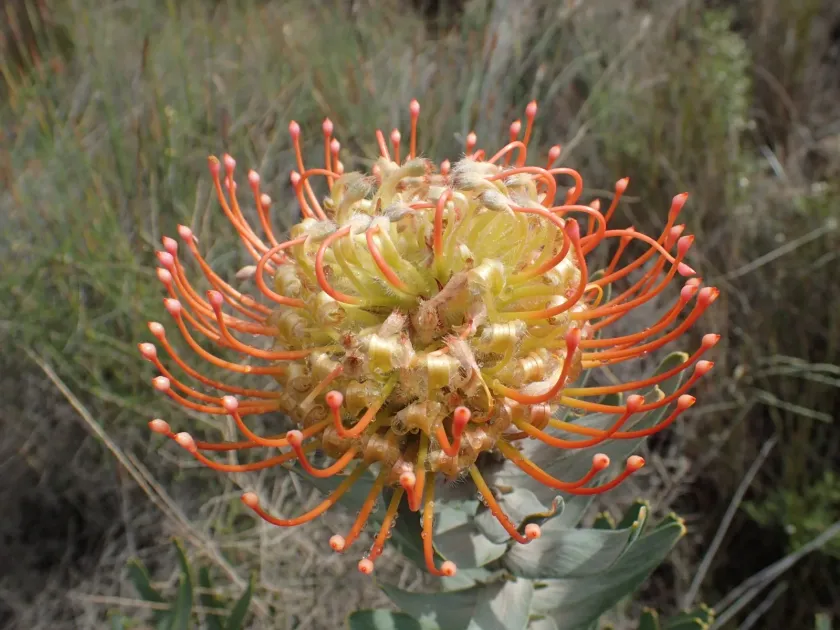
Leucospermum vestitum, commonly known as the silky pincushion, is an evergreen shrub belonging to the Proteaceae family. Native to the Cape region of South Africa, it is an economically valuable crop grown for its vibrant, pin-like inflorescences that are highly prized in the international floral industry.
The plant thrives in Mediterranean-type climates with cool, wet winters and warm, dry summers. It requires full sun exposure to produce high-quality, long-lasting flowers. Insufficient light results in weak stems and poor coloration of the blooms, which significantly reduces market value.
Regarding soil conditions, Leucospermum vestitum requires well-drained, acidic, and low-nutrient soil. Heavy or clay-based soils are unsuitable because they retain too much water, leading to root rot. If the natural soil is not sandy or stony, raised beds are recommended to improve aeration.
A distinctive biological feature of this species is its cluster roots (proteoid roots), which are highly efficient at absorbing nutrients but are also very sensitive to phosphorus. Fertilizers with high phosphorus content must be avoided, as they can cause toxicity and stunt growth.
Water management is crucial during the growing season. While the plants are drought-tolerant once established, supplemental irrigation is necessary to ensure optimal flower development and stem elongation, especially in commercial production settings.
Main diseases and pests
The most significant threat to Leucospermum vestitum plantations is the soil-borne fungus Phytophthora, which attacks the root system. This disease is exacerbated by poor drainage and waterlogging; once infected, plants are extremely difficult to treat.
Pests such as mealybugs, aphids, and mites can cause serious damage by feeding on young shoots and buds. These insects can also serve as vectors for various viral diseases, leading to curled leaves and deformed flower heads.
Botrytis, or grey mold, is another common concern, particularly in high-humidity environments or during periods of prolonged rainfall. Improving airflow within the planting site through proper spacing is essential to mitigate the risk of fungal infections.
Nematodes are also problematic in sandy soils where proteas grow. They damage the delicate root system, opening the way for opportunistic soil pathogens. Regular soil testing and the use of healthy, pathogen-free plant material are critical for long-term success.
Effective management involves an integrated approach: selecting disease-resistant clones, maintaining strict hygiene on the farm by removing infected plant debris, and using biological control agents or targeted pesticides only when necessary.
Harvesting
Harvesting Leucospermum vestitum requires precise timing. For the best vase life, flowers should be cut when the florets are approximately 50-70% open. Harvesting too early results in poor flower development, while late harvesting leads to rapid aging and browning.
The use of sharp, disinfected pruning shears is mandatory for every cut to avoid spreading diseases. Workers should remove only a portion of the flowering stems from each bush to ensure the plant maintains enough foliage for continued growth and next year’s productivity.
Post-harvest treatment includes placing stems immediately into clean water treated with a hydration solution to prevent air bubbles from blocking the vascular tissue. Fast cooling to 4-6 degrees Celsius is necessary to maintain quality during storage and transport.
Flowers are typically graded by stem length and the uniformity of the bloom. Proper packaging ensures that the delicate pin-like structures are not crushed during shipping, as physical damage significantly lowers the grade of the product in global flower markets.
When properly handled, the cut stems have excellent longevity, often lasting two to three weeks in a vase. This durability makes them highly favored by florists for intricate bouquets and long-lasting floral arrangements.