
Eucalyptus-leaf pincushion
Leucospermum eucalyptifolium
Description
Growing requirements
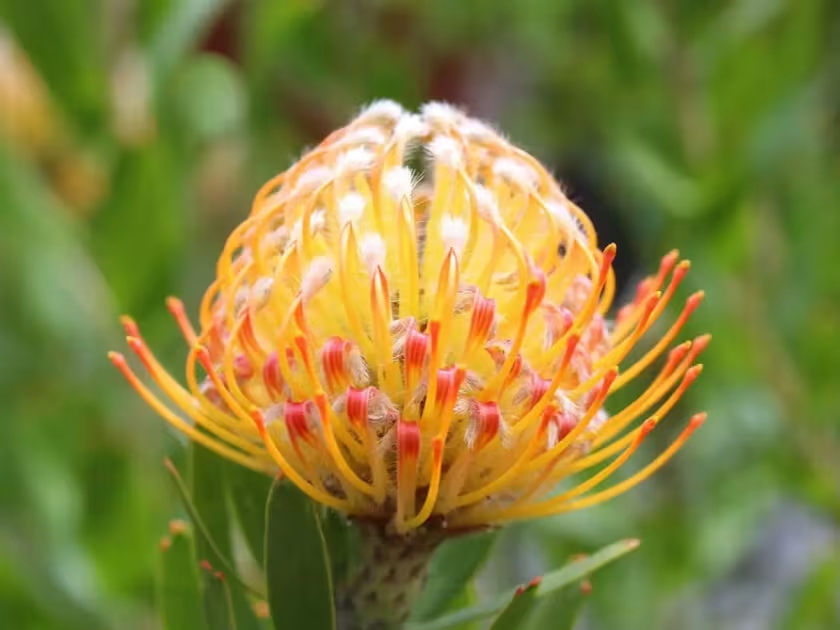
The Eucalyptus-leaf pincushion (Leucospermum eucalyptifolium) is a robust shrub belonging to the Proteaceae family, recognized for its distinctive foliage and unique, pincushion-like flower heads.
Native to the Western Cape of South Africa, this plant is adapted to nutrient-poor soils and a Mediterranean climate. It thrives in open, sunny locations with excellent drainage, which is critical for its survival.
The soil profile must be acidic (pH 5.0–6.5) and sandy, mimicking the natural conditions of the Cape fynbos. Heavy soils are unsuitable as they promote root rot and restrict necessary oxygen exchange.
Climatic requirements demand a frost-free environment. While it is moderately drought-tolerant once established, supplemental irrigation is required in greenhouse settings to ensure high-quality flower production.
Fertilization must be handled with extreme caution. These plants have evolved to handle very low phosphorus levels, so standard commercial fertilizers can easily reach toxic concentrations for the roots.
Yield
The primary economic value of this crop is its usage as a premium cut flower in global markets. The stems are durable and highly valued for their longevity in floral arrangements.
Yield capacity is optimized through strategic pruning, which encourages branching and produces a higher number of flowering terminals per plant cycle during the harvest season.
Main diseases and pests
The most significant threat is Phytophthora cinnamomi, a soil-borne pathogen that causes sudden root decay. Maintaining strict sanitary conditions in the growing area is essential for disease prevention.
Pest management focuses on controlling aphids and spider mites. These pests thrive in protected greenhouse environments, necessitating regular monitoring and the use of biological control agents where possible.
Harvesting
Harvesting is performed by cutting the stems at specific stages of flower opening. Proper post-harvest handling, including re-cutting stems under water, significantly extends the vase life of the product.