
Leucospermum saxosum
Leucospermum saxosum
Description
Growing requirements
Leucospermum saxosum is a striking evergreen shrub belonging to the Proteaceae family. It originates from the high-altitude mountainous regions of Southern Africa, where it thrives in well-drained, rocky environments, earning its common name.
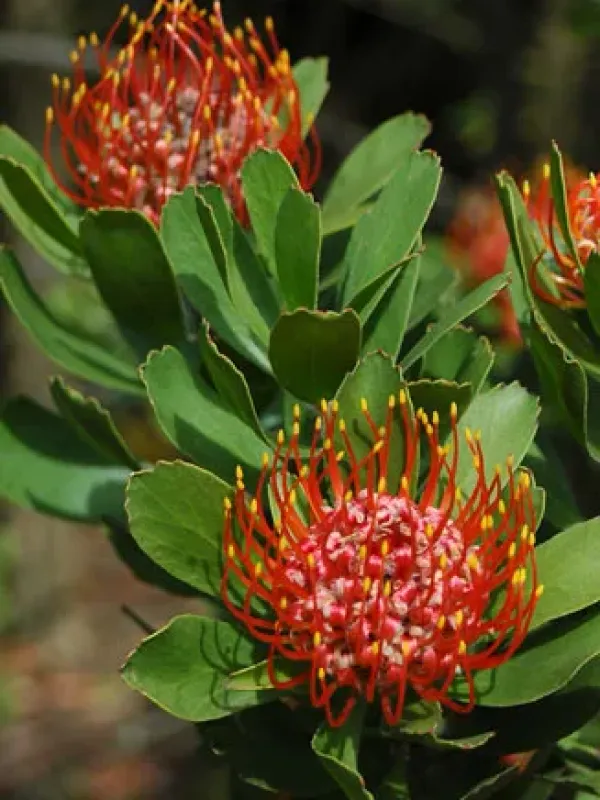
Botanically, the plant is characterized by its leathery, serrated leaves and unique inflorescences. The flowers appear as distinct 'pin-cushion' heads, featuring long, colorful styles that extend well beyond the perianth, providing a dramatic aesthetic appeal.
Success in cultivation requires specific soil conditions: it demands highly porous, acidic, and low-nutrient substrates. In fact, high phosphorus levels are detrimental to the root system, as these plants have evolved to extract nutrients from very poor soils.
Climatically, L. saxosum requires full sun exposure and excellent air circulation. While it can handle moderate temperature fluctuations, it is not frost-hardy and must be protected or grown in controlled greenhouse environments in non-tropical climates.
Management practices include careful irrigation with soft water to prevent salt accumulation. Pruning is essential after the flowering cycle to maintain the plant's structural integrity and to promote healthy vegetative growth for the following season.
Main diseases and pests
The greatest threat to the species is root rot caused by pathogens such as Phytophthora, which proliferate in poorly drained soils. Once the root system is compromised, the plant is usually impossible to rescue.
Pest management is focused on controlling scale insects and spider mites, particularly when grown under greenhouse cover. Integrated pest management, focusing on biological controls and proper humidity levels, is recommended for sustainable production.
Harvesting
The primary economic use for this crop is the international cut-flower trade. Due to the high durability of the flowers and their unique structural form, they are highly sought after for premium floral arrangements and wedding bouquets.
Harvesting is performed by carefully selecting stems with fully developed inflorescences. Post-harvest handling involves immediate placement in clean water and maintaining a cool environment to prevent premature wilting or style collapse.