
Leucospermum hybrid
Leucospermum hybrids
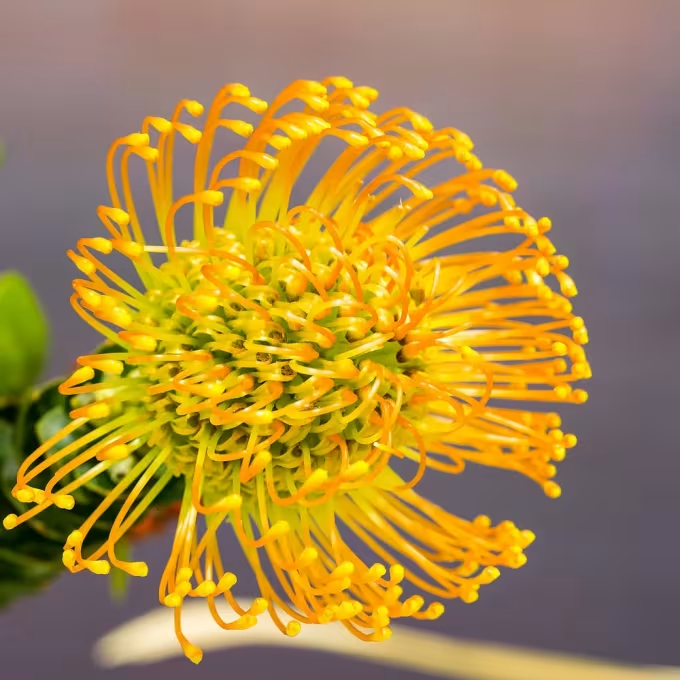
Description
Sowing dates
Propagation of Leucospermum hybrids in commercial settings is primarily achieved vegetatively using semi-hardwood cuttings. Cuttings are typically taken in late summer or early autumn when shoots reach optimal maturity.
Seed propagation is less common due to low germination rates and the complex requirements for seed dormancy breaking, often involving smoke or fire-related triggers. Consequently, nurseries rely on cloning to preserve the unique traits of specific hybrids.
Successful rooting requires a well-draining substrate based on perlite and peat, with very low phosphorus content. The ideal temperature range for root development is 20–22 degrees Celsius, provided that humidity is kept stable and moderate.
Young plants are transplanted into soil or containers only after a robust root system has established. It is crucial to minimize root disturbance, as the plant is notoriously sensitive to transplant shock and physical damage.
This crop is highly light-demanding, requiring maximum solar exposure in greenhouse environments. High light intensity is a critical factor influencing the vibrancy of the bracts and the overall quality of the flower stems.
Growing requirements
The Leucospermum hybrid belongs to the Proteaceae family, with its ancestors originating primarily from the fynbos regions of South Africa. It is an evergreen shrub prized for its iconic, pincushion-like inflorescences featuring prominent, colorful styles.
The plant has strict soil requirements, demanding acidic conditions with a pH range of 5.0 to 6.0 and exceptional drainage. Waterlogging is lethal, as it quickly leads to the decay of the sensitive proteoid root system.
Cultivation requires a Mediterranean or subtropical climate. The plant has limited frost tolerance, generally failing if temperatures drop below -2 to -5 degrees Celsius, thus necessitating protected greenhouse cultivation in cooler regions.
Fertilization must be strictly controlled, specifically avoiding high-phosphorus formulations. Members of the Proteaceae family have evolved in nutrient-poor soils and can accumulate toxic levels of phosphorus if standard fertilizers are used.
Irrigation should be consistent but carefully managed. The use of soft water is recommended, as high salt or calcium content can induce leaf chlorosis and significantly stunt the plant's growth.
Yield
Yield in Leucospermum production is measured by the number of marketable stems per shrub per season. Depending on the plant age and the specific hybrid cultivar, productivity typically ranges from 10 to 30 high-quality stems.
The productive lifespan of a Leucospermum plantation is approximately 8–10 years with proper management. After this period, flowering capacity diminishes, necessitating either rejuvenation pruning or total crop replacement.
Harvest quality is defined by stem length and the stage of bloom opening. Commercial standards classify stems by height, which directly dictates their market value and suitability for different floral arrangement segments.
Harvesting is best performed in the early morning when the inflorescences are in the active stage of opening. Proper timing ensures maximum vase life, which for this crop can extend to 2–3 weeks with correct care.
Regular post-harvest pruning encourages the development of new lateral shoots. This practice is essential for maximizing yield in the subsequent season and maintaining the desired compact architecture of the shrub.
Main diseases and pests
The most significant threat to Leucospermum is soil-borne pathogens, particularly Phytophthora species. These fungi cause root rot, which is difficult to manage effectively once physical signs of wilting become visible above ground.
Insect pests, such as mealybugs and spider mites, can cause severe damage in greenhouse conditions, particularly when air humidity is low. Regular monitoring of the foliage allows for early detection and intervention.
Excessive air humidity within the greenhouse facilitates the development of grey mold (Botrytis) on the inflorescences. Ensuring effective air circulation and maintaining an optimal microclimate are the best preventative measures.
- Phytophthora root rot as the primary cause of plant death.
- Spider mite infestations during periods of low humidity.
- Botrytis development due to poor air circulation.
- Severe sensitivity to phosphorus toxicity.
- Chlorosis caused by irrigation with hard or saline water.
Disease prevention relies on strict drainage control, tool sanitation, and maintaining proper soil chemistry. Chemical treatments should be applied with caution, given the high sensitivity of Proteaceae to various pesticides.
Harvesting
Harvesting is a critical phase that determines the final quality of the cut flowers. Stems are cut using sharp, disinfected pruners, ensuring that sufficient foliage remains on the parent plant to support continued photosynthesis.
Flowers are graded by stem length and bloom maturity. Utmost care is taken to avoid damaging the delicate bracts during transport, as they are fragile and susceptible to physical bruising that ruins market appearance.
Freshly cut stems must be placed in clean water mixed with commercial floral preservatives formulated for exotic flowers. This prevents bacterial proliferation in the stem vessels and extends the vase life significantly.
Transport occurs under refrigerated conditions at temperatures between 5 and 8 degrees Celsius. Maintaining the cold chain is vital to preserving leaf turgor and color vibrancy during delivery to global markets.
Pre-market preparation involves removing damaged lower leaves and applying professional protective packaging. Careful wrapping prevents mechanical damage to the inflorescences during the final stages of the supply chain.