
Rocket pincushion
Leucospermum reflexum
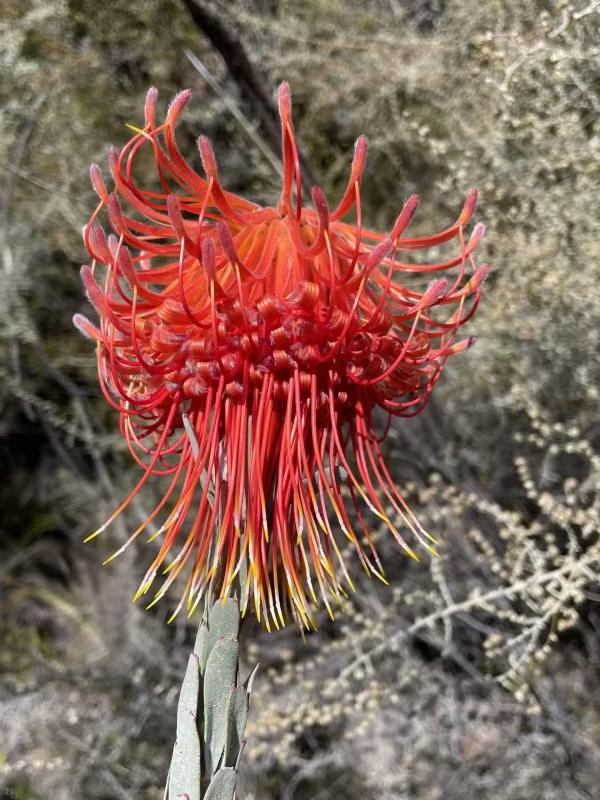
Description
Growing requirements
The Rocket pincushion, scientifically known as Leucospermum reflexum, is a shrub belonging to the Proteaceae family, native to the Western Cape region of South Africa. It is highly valued in the international floral industry for its unique, brush-like flower heads.
This species requires a warm, frost-free climate, which limits its commercial outdoor production to specific regions. In most parts of the world, it is cultivated in greenhouses where temperature and humidity can be precisely controlled.
Cultivation success depends heavily on soil composition. It requires highly acidic, well-draining, and low-nutrient soils. High phosphate levels in the soil are toxic to this plant, often leading to rapid decline and death of the root system.
The crop demands full sunlight to thrive. In greenhouse settings, supplemental lighting may be necessary during winter months to maintain plant vigor and encourage the formation of high-quality flower heads for harvesting.
Water quality is just as important as soil health. The plant is sensitive to salt build-up and requires high-quality water with low mineral content to maintain nutrient uptake efficiency throughout its vegetative cycle.
Main diseases and pests
The most significant pathological threat to the crop is Phytophthora root rot. This fungal pathogen thrives in conditions of poor drainage and excessive soil moisture, making preventative irrigation management the top priority for growers.
Pest management focuses on controlling aphids and spider mites, which can cause severe damage to young foliage and developing flower buds. Integrated pest management protocols, including regular monitoring, are essential for maintaining crop health.
Harvesting
Harvesting is performed once the flower heads are fully matured and show the characteristic color. Each stem should be cut leaving a portion of the foliage on the plant to encourage new lateral growth for the following season.
Post-harvest care involves immediate cooling and hydration in a clean, acidic solution to prevent stem blockage. Proper post-harvest protocols ensure the long vase life required for international flower market distribution.