
Leucospermum fulgens
Leucospermum fulgens
Description
Growing requirements
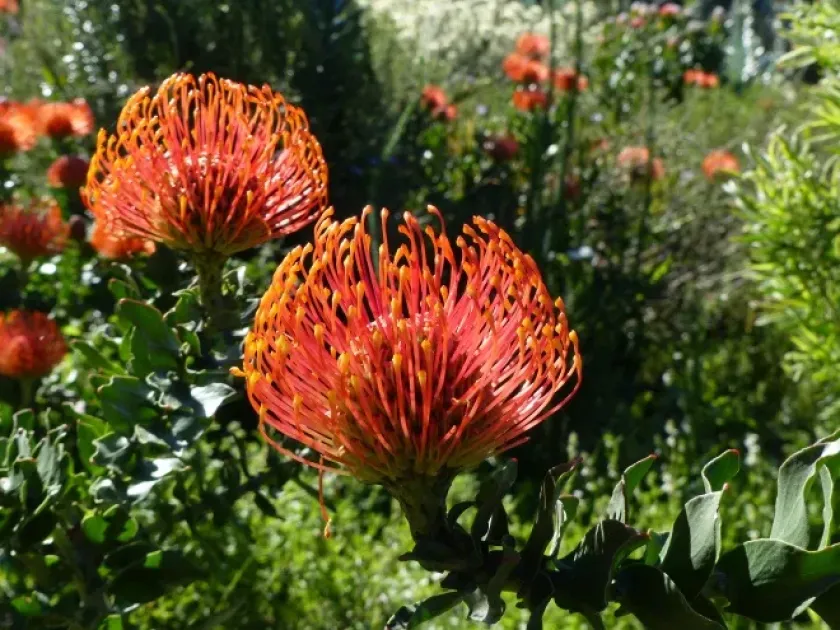
Leucospermum fulgens, commonly known as a type of pincushion flower, is a member of the Proteaceae family native to the Cape region of South Africa. It is a prized ornamental shrub known for its vibrant, structural inflorescences that are highly demanded in the cut flower market.
The plant thrives in full sunlight and requires excellent airflow to maintain health. It is not cold-hardy and typically requires greenhouse conditions in non-Mediterranean climates to avoid damage from frost and cold, damp winters.
Soil requirements for Leucospermum fulgens are specific: it necessitates acidic, low-phosphorus, and well-draining sandy soils. Poor drainage is the most common cause of failure in cultivation, as the root system is highly susceptible to root rot in waterlogged conditions.
Agronomic management involves careful irrigation, ensuring the substrate dries out between watering intervals. Fertilization should be avoided or limited to specialized low-phosphorus blends, as Proteaceae are adapted to nutrient-poor soils and are easily harmed by chemical excess.
The main commercial value lies in its use as a premium cut flower. The species is valued for its unique appearance, distinct color palette, and exceptional vase life, making it a staple in professional floristry and international flower trade.
Main diseases and pests
The most significant threat to Leucospermum fulgens is Phytophthora root rot, which is often fatal. Preventive strategies focus on substrate hygiene, proper drainage, and avoiding the introduction of contaminated soil or water into the growing area.
Common pests include scale insects and mealybugs that congregate on new growth. Management requires vigilant monitoring and the use of integrated pest management practices to avoid phytotoxicity that can occur with certain chemical pesticides on Proteaceae foliage.