
Leucospermum grandiflorum
Leucospermum grandiflorum
Description
Growing requirements
Leucospermum grandiflorum is a notable species within the Proteaceae family. Originating from the Cape region of South Africa, this plant is well-adapted to Mediterranean-type climates with cool, wet winters and warm, dry summers.
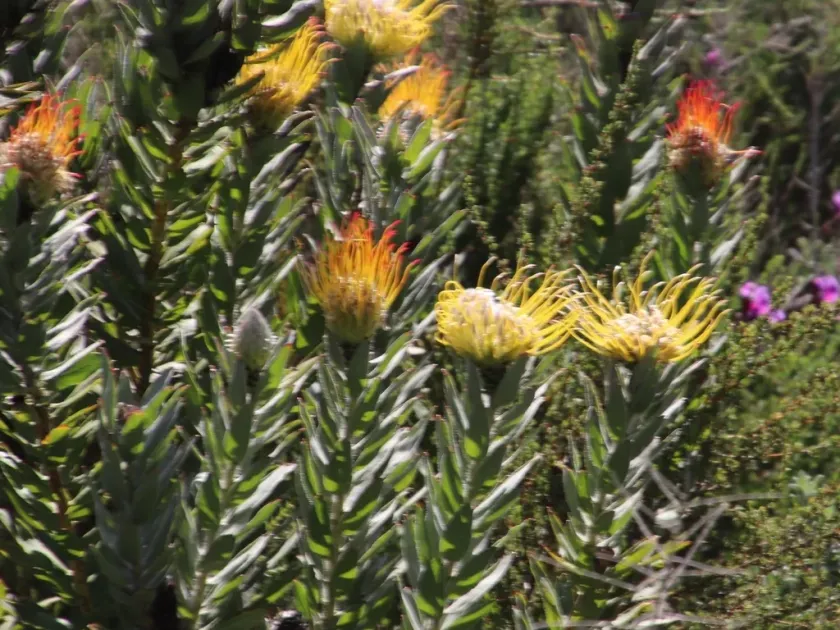
The shrub features leathery foliage and distinctive, large inflorescences. The flower heads are composed of many small tubular florets, each with a long, rigid style, which gives the bloom its iconic pincushion appearance.
Successful cultivation requires high light intensity and excellent air circulation. The plant is not frost-tolerant and thrives best in greenhouse environments where temperatures can be strictly controlled to mimic its native mountain habitat.
The soil must be acidic, well-drained, and very low in phosphorus. As a member of the Proteaceae, the roots possess specialized cluster roots (proteoid roots) that are extremely sensitive to fertilizer burn, particularly from phosphorus-rich compounds.
Commercially, this species is highly valued in the floriculture industry. It is a premier cut flower, prized for its structural elegance and long vase life, making it a staple in high-end floral design and weddings.
Main diseases and pests
The primary pathological threat to Leucospermum grandiflorum is Phytophthora root rot. This pathogen thrives in saturated soil conditions, attacking the roots and often resulting in the rapid decline and death of the plant.
Pests such as mealybugs and spider mites are frequent invaders in greenhouse settings. They tend to cluster in the dense flower heads or under the leaves, draining sap and leaving the plant susceptible to secondary fungal growth.
Preventive management is crucial, focusing on the hygiene of the growing medium and water quality. Ensuring the substrate is acidic and never remains waterlogged is the first line of defense against soil-borne pathogens.
Regular monitoring of leaf undersides and flower stems is necessary to catch pest infestations early. Integrated pest management, including the use of beneficial predatory insects, is often preferred over chemical applications.
Additionally, improper pH management in the irrigation water can lead to nutrient deficiencies, specifically iron chlorosis, which manifests as yellowing leaves while the veins remain green.