
African cyclamen
Cyclamen africanum Boiss. & Reut.
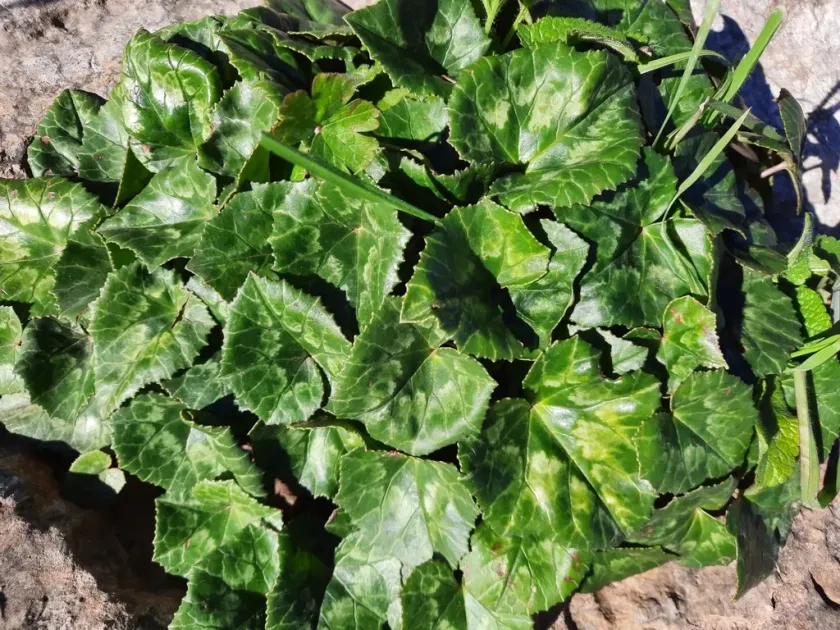
Description
Growing requirements
Cyclamen africanum is a perennial tuberous plant belonging to the Primulaceae family. Native to North Africa, specifically Algeria and Tunisia, it thrives in rocky terrain and Mediterranean scrubland environments.
The plant requires specific climate conditions, preferring cool temperatures during the growing season and a distinct dry rest period. It is not cold-hardy and must be kept away from frost in most agricultural zones.
Soil quality is critical for the success of this species. It demands a highly porous, well-draining potting medium that mimics natural mountainous soil, typically incorporating leaf mold, grit, and loam.
In terms of light, the plant performs best in bright, indirect light. Direct sunlight can scorch the large, attractive, leathery leaves, so placing the plants in a shaded greenhouse or a bright window is recommended.
Agricultural management requires careful attention to irrigation. Water should be applied sparingly, ensuring that the tuber crown remains dry to prevent rot, especially during the dormant summer phase.
Main diseases and pests
The primary threats to Cyclamen africanum are fungal pathogens, particularly Botrytis cinerea, commonly known as gray mold, which thrives in humid and poorly ventilated conditions.
Root and tuber rot are the most lethal issues, usually caused by overwatering or soil that lacks adequate aeration. Once the tuber begins to decay, recovery is rarely possible.
Pests can significantly impact the plant's health. The cyclamen mite is particularly problematic, as it hides in the plant's center, causing stunted growth, curled leaves, and distorted flower buds.
Spider mites are another common challenge, especially in warm and dry indoor conditions. They feed on plant fluids, leading to a mottled appearance on the leaves and eventual defoliation.
Proactive monitoring and the application of appropriate miticides or fungicides at the first sign of distress are essential practices for maintaining a healthy crop throughout its long lifecycle.