
European cyclamen
Cyclamen purpurascens Mill.
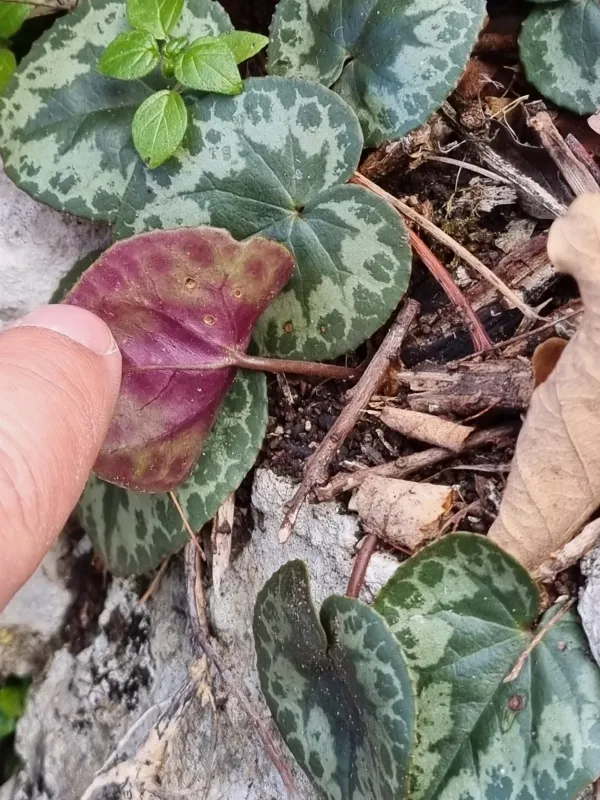
Description
Growing requirements
European cyclamen (Cyclamen purpurascens) is a perennial flowering plant belonging to the Primulaceae family. It is native to the woodland regions of Central and Southern Europe, where it thrives in shaded areas with calcareous soil conditions.
Botanically, the plant is recognized by its tuberous structure and evergreen leaves, which are decorated with unique silver-marbled patterns. This species is unique among its genus for retaining its foliage throughout the entire year.
Cultivation requires a cool, humid environment with protection from direct sunlight. The plant is particularly sensitive to high temperatures, making it essential to provide adequate ventilation to prevent the overheating of the tuber.
The substrate must be light, well-draining, and slightly alkaline. It is critical to ensure that the soil remains consistently moist but never waterlogged, as stagnant water is the primary cause of tuber decay in intensive cultivation.
Beyond its value as an ornamental plant, the European cyclamen is studied for its chemical composition, containing various biologically active compounds that have historically been utilized for specific pharmaceutical applications.
Main diseases and pests
The most common fungal diseases affecting this crop include Fusarium wilt and gray mold, which are favored by poor aeration and excessive irrigation practices.
Pest management is focused on controlling the cyclamen mite, a microscopic pest that targets young tissue, leading to stunted growth and twisted, deformed foliage.
To mitigate these risks, growers must implement strict sanitation protocols, ensuring that no water remains on the crown of the tuber after watering.
Integrated pest management strategies are essential, involving both physical separation of infected plants and the use of targeted miticides and fungicides.
Consistent monitoring of leaf underside conditions is vital for early detection of pest infestations, which is the key to maintaining healthy and productive cyclamen populations.