
Olive grevillea
Grevillea olivacea
Description
Growing requirements
Olive grevillea (Grevillea olivacea) is an evergreen shrub belonging to the Proteaceae family. It is native to the coastal regions of Western Australia, where it thrives in sandy, well-drained soils and Mediterranean-like climatic conditions.
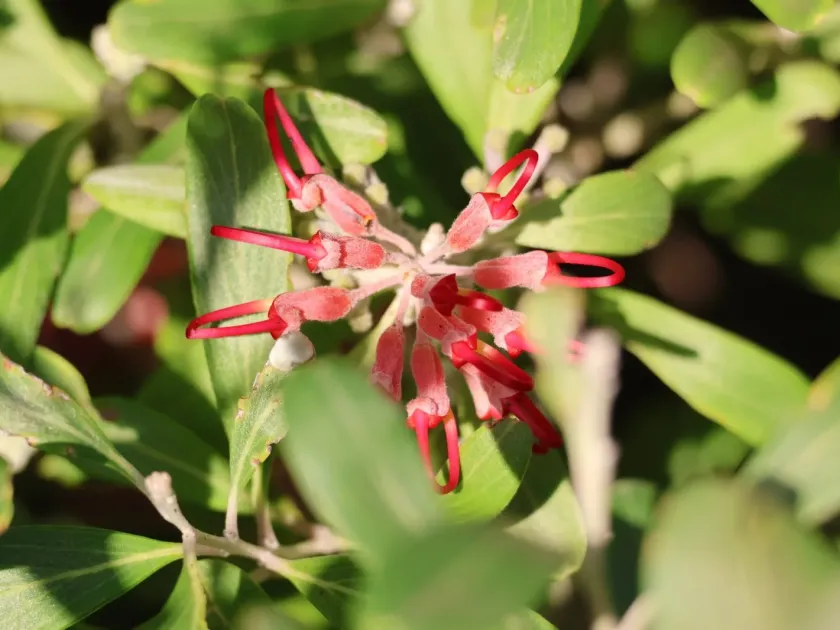
The plant requires full sun exposure to maintain its dense foliage and produce its characteristic orange-red or yellow flowers. In a landscape, it serves as an excellent screening plant or a windbreak due to its rapid growth rate.
Soil requirements are strict: the plant needs highly porous soil. It is notoriously intolerant of phosphorus-based fertilizers, as its proteoid roots are specialized for extracting nutrients from nutrient-poor environments.
Climatic adaptability is moderate. While it handles heat and drought exceptionally well once established, it is sensitive to heavy frosts. In colder regions, it should be placed in sheltered spots near walls that retain heat.
Pruning is essential for maintaining the shape and vigor of the plant. A light trim should be conducted immediately after the main flowering season to encourage new growth and prevent the shrub from becoming excessively leggy.
Main diseases and pests
Root rot is the most common cause of failure in Grevillea olivacea. It is typically caused by poorly drained soils, which encourage the development of soil-borne pathogens like Phytophthora.
Scale insects and mealybugs can occasionally infest the stems and undersides of leaves, especially if the plant is grown in containers or areas with restricted air movement.
Leaf spots caused by fungal infections can occur during periods of prolonged high humidity or lack of ventilation. Keeping the canopy open through regular pruning helps to mitigate this risk.
Pest management should focus on non-chemical methods initially, such as manual removal of affected parts, given that many Grevillea species are sensitive to synthetic chemicals.
Vigilance against moisture buildup around the base of the stem is crucial for long-term survival, as the plant is extremely susceptible to collar rot if moisture persists at the soil line.