
Holly-leaf grevillea
Grevillea aquifolium
Description
Growing requirements
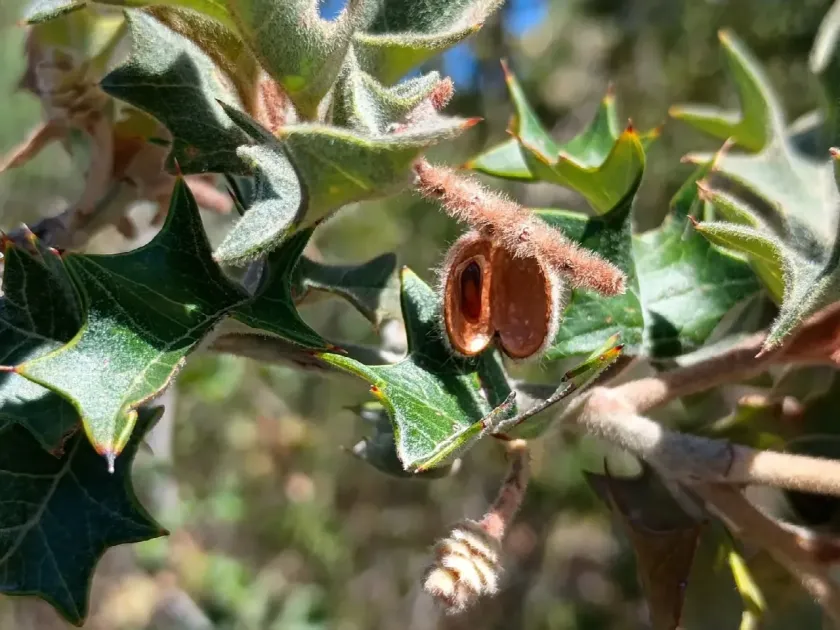
The Holly-leaf grevillea (Grevillea aquifolium) is a sprawling evergreen shrub that belongs to the Proteaceae family. It is endemic to Australia and is widely recognized for its prickly, holly-like foliage and distinctive spider-like flower clusters that emerge throughout the season.
Successful cultivation requires soil with excellent drainage properties. As a typical Proteaceae, it is highly sensitive to phosphorus-based fertilizers; therefore, one must use specialized low-phosphorus feeds or avoid direct fertilization in enriched soils altogether.
The plant thrives in full sun exposure, which is necessary to maintain its compact growth habit and promote maximum flowering. While it can tolerate partial shade, insufficient light often results in "leggy" growth and reduced bloom density, negatively impacting its ornamental value.
Watering requirements are moderate; the plant prefers a period of drying out between irrigation cycles. In pot cultivation, ensure the container has large drainage holes to prevent water accumulation, which can quickly lead to root oxygen deprivation and subsequent decay.
In landscaping, this species is highly valued for its ability to act as a natural barrier due to its dense, serrated leaves. It is often utilized in xeriscaping, coastal gardens, and bird-attracting habitats where its nectar-rich flowers provide a valuable food source for local pollinators.
Main diseases and pests
Root rot, primarily caused by Phytophthora cinnamomi, is the most critical threat to the longevity of this shrub. Avoiding soil waterlogging is the primary method of disease prevention, as there are limited effective curative treatments once the infection reaches the root system.
Pest issues such as aphids and scale insects may appear on tender new growth. Infestations are generally controlled by maintaining plant vigor and using horticultural soaps or neem oil, which are less harsh than systemic chemical pesticides for this sensitive species.