
Grevillea baileyana
Grevillea baileyana
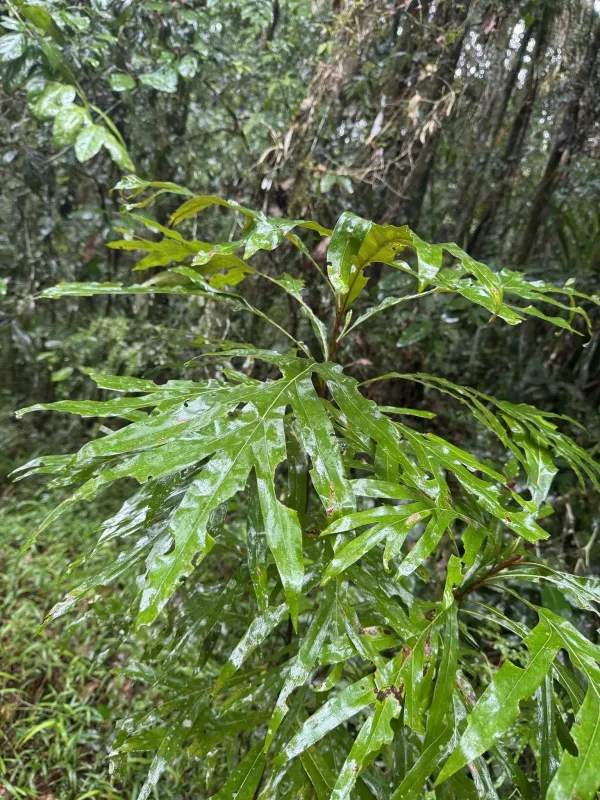
Description
Growing requirements
Grevillea baileyana, commonly known as white oak, is a tall evergreen tree belonging to the Proteaceae family. It originates from the rainforests of Queensland, Australia, and parts of New Guinea.
This species thrives in tropical climates where temperatures remain consistently warm throughout the year. It requires a frost-free environment to maintain its growth and health, making it suitable for specific horticultural zones.
The tree features striking foliage, which is deeply lobed and displays a distinct silvery underside. Its flowers are creamy-white, brush-like inflorescences that provide a valuable nectar source for local fauna.
Regarding soil preferences, it demands well-drained, acidic conditions. Like many other Proteaceae, it is highly sensitive to soil phosphorus levels, which must be carefully monitored in an agricultural or garden setting.
Its primary use is ornamental landscaping, where it is valued for its rapid growth and architectural form. In its native habitat, the timber has also been historically used for small-scale construction and woodworking.
Main diseases and pests
Root rot, particularly caused by Phytophthora, represents the most significant threat to Grevillea baileyana. It typically occurs in poorly drained soils where water remains stagnant for extended periods.
Insect pests such as scale insects and mealybugs can infest the foliage and tender stems. Management involves monitoring the plant and applying horticultural oils or appropriate biological controls when necessary.
Phosphate toxicity is a physiological disorder that occurs when the plant is exposed to high levels of phosphorous-based fertilizers. This often leads to severe foliage yellowing and potential plant death.
Fungal leaf spots may appear in high humidity environments with poor airflow. Improving the spacing between plantings and ensuring good air circulation around the canopy is an essential preventive practice.
The plant is generally robust, but exposure to harsh, drying winds can cause physical damage to the leaves. Providing shelter in exposed locations is a standard horticultural requirement for healthy establishment.