
Grevillea hybrids
Grevillea hybrids
Description
Growing requirements
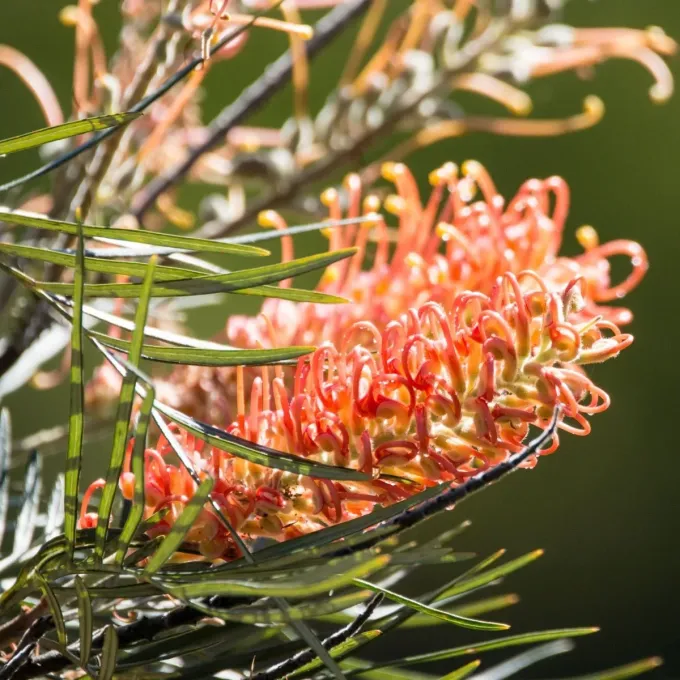
Grevillea hybrids belong to the Proteaceae family and are highly valued for their unique, long-lasting flowers and complex foliage. These plants are essentially hybrid cultivars developed to enhance ornamental traits and cold tolerance.
Originally native to Australia, these plants thrive in Mediterranean-style climates. Today, they are commercially grown worldwide in both open field nurseries and greenhouses for the cut flower industry.
Grevillea plants require full sun exposure to flourish. Placing them in shaded areas will result in leggy, weak stems and a significant reduction in the frequency of blooms, which is critical for their commercial value.
The soil must be well-draining, acidic, and low in phosphorus. These plants have developed specialized cluster roots (proteoid roots) that are extremely efficient at nutrient uptake but highly sensitive to fertilizer burn and heavy soil conditions.
Climate control is essential, as most hybrids are frost-tender. While some varieties can tolerate mild frosts, they generally perform best in temperate conditions where the temperature does not drop below freezing for extended periods.
Main diseases and pests
Root rot caused by Phytophthora species is the most significant threat to Grevillea. It is primarily triggered by poor soil aeration and excessive irrigation, leading to rapid decay of the sensitive root systems.
Spider mites are common pests that thrive in hot, dry environments. They infest the undersides of leaves, causing discoloration and significant stress to the plant, which often leads to foliage drop.
Powdery mildew is a frequent issue in greenhouse environments with inadequate air movement. Maintaining a low-humidity microclimate around the foliage is a key preventative measure for commercial growers.
Scale insects and mealybugs can attach themselves to the stems and branches. Since the plant is sensitive to various chemical pesticides, oil-based horticultural treatments must be applied with caution.
Nutrient toxicity, specifically due to high phosphorus levels, manifests as systemic leaf burn and stunted growth. Agronomists recommend using fertilizers specifically formulated for Proteaceae to avoid damage.