
Grevillea heliosperma
Grevillea heliosperma
Description
Growing requirements
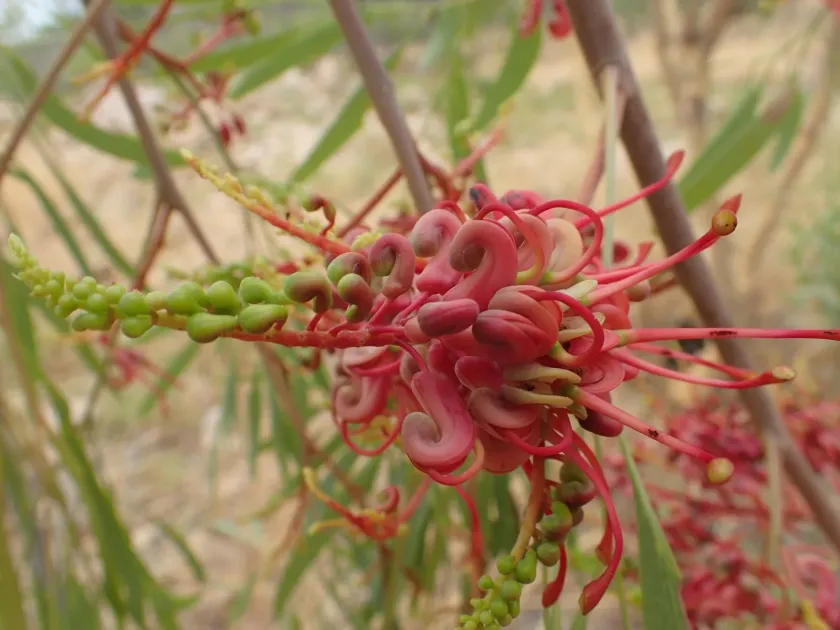
Grevillea heliosperma is a woody evergreen shrub or small tree belonging to the Proteaceae family. It is widely recognized for its vibrant, bright red flowers that bloom in clusters, providing a significant aesthetic appeal and attracting various pollinators in its native habitat.
Originating from the northern regions of Australia, this species thrives in tropical climates characterized by distinct wet and dry seasons. It typically inhabits rocky outcrops, sandy woodland areas, and slopes where it can withstand intense heat and direct sun exposure throughout the year.
For cultivation, proper drainage is the most critical factor. The root system of this species is highly sensitive to waterlogging and phosphorus toxicity. Consequently, growers must use lean, gritty, or sandy soil mixes and avoid the application of standard garden fertilizers rich in phosphorus.
The plant requires full sun to maintain its structural integrity and encourage prolific blooming. In cooler regions, it must be grown in greenhouses where temperatures remain consistently high, as the species is sensitive to frost and cold snaps that can cause severe tissue damage.
Agrotechnical practices involve careful management of water, particularly during the dormant season, to prevent root rot. Propagation is primarily achieved through seeds, which require scarification due to their hard, protective seed coat to ensure a successful germination rate.
Main diseases and pests
The primary threats to Grevillea heliosperma include root rot pathogens, specifically Phytophthora cinnamomi, which thrive in poorly drained soils. Maintaining an open, well-aerated soil structure is the best prophylactic measure against these soil-borne diseases.
Insect pests such as scale insects and mealybugs can occasionally infest the foliage, particularly in confined garden settings or greenhouses. Management involves regular monitoring and the application of horticultural oils, ensuring that chemical treatments are safe for native plant species.