
Grevillea glabrata
Grevillea glabrata
Description
Growing requirements
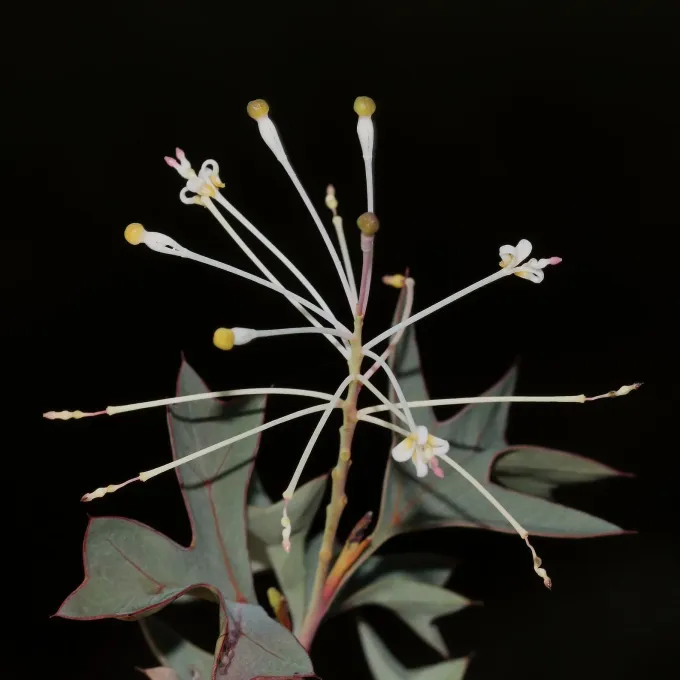
Grevillea glabrata is a distinct woody shrub belonging to the Proteaceae family. Originating from the southwestern regions of Western Australia, this species is well-adapted to Mediterranean-type climates characterized by warm, dry summers and mild winters.
The plant requires full sun exposure to maintain its structural integrity and produce abundant flowers. In its native habitat, it thrives in sandy, well-draining soils that are typically low in nutrients, especially phosphorus, to which the plant is highly sensitive.
Soil drainage is the most critical factor for successful cultivation. The root system is prone to rot if moisture remains trapped, so planters or garden sites must be prepared with high-quality drainage materials or elevated mounds to ensure water flows away efficiently.
Cultural maintenance involves light pruning following the primary flowering phase. This practice prevents the plant from becoming excessively leggy and encourages a denser, more vibrant foliage growth for the following season.
In terms of usage, this plant is primarily valued as an ornamental species in frost-free regions. It serves well as a structural element in native-style gardens and is increasingly appreciated in the florist industry for its unique, long-lasting inflorescences.
Main diseases and pests
The primary threats to Grevillea glabrata health are rooted in environmental management, particularly regarding irrigation techniques and substrate composition.
Phytophthora root rot is the most devastating disease, typically triggered by stagnant moisture and overly dense, non-porous soil mixtures.
Pest populations such as scale insects and spider mites are frequent invaders, thriving in low-humidity environments or stagnant indoor air.
Integrated pest management should focus on early detection, manual removal of insects, and the application of horticultural oils when infestations are observed.
Maintaining proper spacing between individual plants is essential to ensure adequate airflow and reduce the humidity levels that encourage fungal pathogen development.