
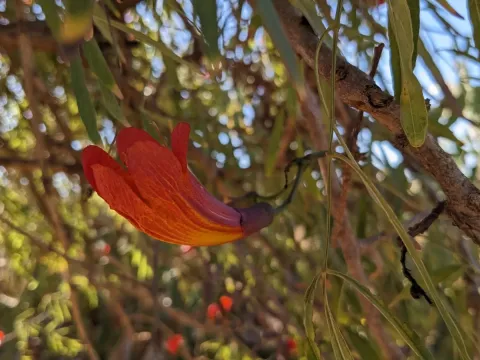
Fernandoa
Fernandoa
Fernandoa is a genus of evergreen or deciduous trees belonging to the Bignoniaceae family. In the wild, these plants are primarily found in the tropical regions of Africa and Southeast Asia, thriving in warm and humid environments.
What the section contains


Fernandoa
The culture has high requirements for temperature regimes, preferring zones with consistently warm conditions without sharp fluctuations. Optimal growth is observed in tropical climates where average temperatures do not drop below 18–20 degrees Celsius.
Successful cultivation of Fernandoa requires well-drained, fertile soils with a neutral or slightly acidic reaction. The plant does not tolerate waterlogging in the root zone, which can lead to rapid root rot and the death of the seedling.
Lighting is a critical factor for development: Fernandoa needs bright, diffused light or partial shade. Under direct equatorial sun, young plants require protection from excessive overheating and leaf burns.
Botanically, the genus is characterized by opposite leaves, often imparipinnate, and large bell-shaped or funnel-shaped flowers. The fruits are long, pod-like capsules containing numerous winged seeds that are dispersed by wind.
The economic use of Fernandoa is primarily aimed at ornamental landscaping of parks and avenues in tropical countries. Some species are valued for their durable wood, which finds application in local construction and the manufacturing of carpentry products.
Seed material collection is carried out after the fruits have fully ripened, when the pods begin to dry out and change color to a darker shade. The process requires care to prevent premature opening of the capsules and loss of seeds.
In the medicine of certain regions, some parts of the plant are used in traditional practices, although their application requires special knowledge due to the possible biological activity of metabolites contained in the bark and leaves.
Agrotechnical care includes regular loosening of the tree circle and the application of organic fertilizers during the active growing season. Pruning is performed to shape a beautiful crown and remove dry or damaged branches.
Propagation is carried out both by seeds and by cuttings. Seeds require preliminary preparation and are sown in a prepared substrate with high air humidity, while strictly monitoring the temperature regime for successful germination.