
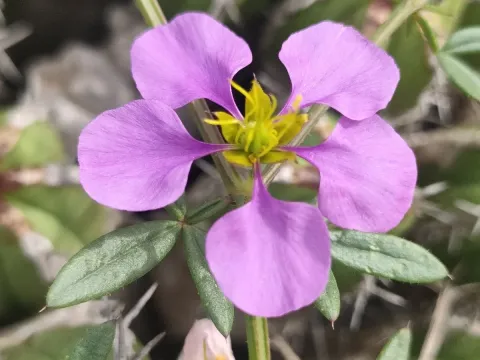
Fagonia
Fagonia
Fagonia is a typical representative of xerophytic flora, so sowing is performed after stable positive temperatures are reached, when the soil warms up to 15–20 degrees Celsius.
What the section contains


Fagonia
In natural conditions, seeds germinate after periods of precipitation, a factor that must be considered when planning sowing in artificial cultivation environments.
Sowing is carried out either on the surface or at a shallow depth, as small seeds require firm contact with the substrate to ensure successful germination.
In agronomic practice, stratification methods are often used to simulate seasonal changes found in desert and semi-desert conditions, enhancing germination rates.
The optimal sowing time for most Fagonia species is during the spring, which eliminates the risk of sudden night frosts that can be detrimental to young seedlings.
The plant belongs to the Zygophyllaceae family and is highly demanding of light, preferring direct sunlight throughout the entire daylight hours.
Fagonia is adapted to harsh conditions, withstanding extreme temperatures and moisture deficits, making it an ideal crop for rocky and sandy soils with low organic content.
The plant prefers well-drained soils, as waterlogging and high soil moisture levels can provoke root rot and lead to the loss of the crop.
A crucial factor for development is the presence of mineral salts in the soil, to which Fagonia exhibits high tolerance compared to many other agricultural crops.
Climatic requirements include minimal precipitation and low relative air humidity during the growing season to prevent the development of fungal pathogens.
The yield of Fagonia is primarily evaluated by the volume of above-ground biomass, which contains valuable bioactive compounds such as flavonoids and saponins.
Quantitative indicators of raw material yield directly depend on the intensity of insolation and the ability to provide minimal controlled irrigation during the active growth phase.
When maintaining proper planting density, the yield of dry medicinal raw material can range from several hundred kilograms to 1.5 tonnes per hectare, depending on the species.
Yield has a seasonal nature: the peak accumulation of beneficial compounds is observed during the flowering period, which is the determining factor for harvest planning.
Since the crop is not yet fully utilized on an industrial scale, yield statistics vary significantly based on the natural range of the specific species.
The primary threats to Fagonia are root rots, which develop exclusively when agronomic practices are violated, specifically through excessive watering.
Pests specific to this genus include certain mite species and aphids, which may damage young shoots when grown in greenhouse conditions.
The plant possesses high resistance to most pests due to specific secondary metabolites that repel phytophages through their unique chemical composition.
Weeds represent a serious competitive threat during the early growth stages, requiring careful field preparation and timely weeding in the first month after emergence.
Overall, Fagonia is considered a hardy crop that requires minimal expenditure on plant protection, provided that the ecological requirements of the site are met.
Harvesting Fagonia is carried out mainly by hand or using mechanical mowers during the peak flowering period, when the concentration of beneficial compounds is at its highest.
The cut biomass must be subjected to rapid drying in well-ventilated conditions, avoiding direct sunlight to preserve the chemical activity of the compounds.
The harvesting process requires care, as many Fagonia species have prickly stipules, which complicates manual handling without the use of protective equipment.
After drying, the raw material is crushed and separated to remove woody stem parts that hold no pharmacological value.
Proper management of the harvest cycle ensures the production of high-quality raw materials suitable for processing in the pharmaceutical industry.