
Fagonia cretica
Fagonia cretica
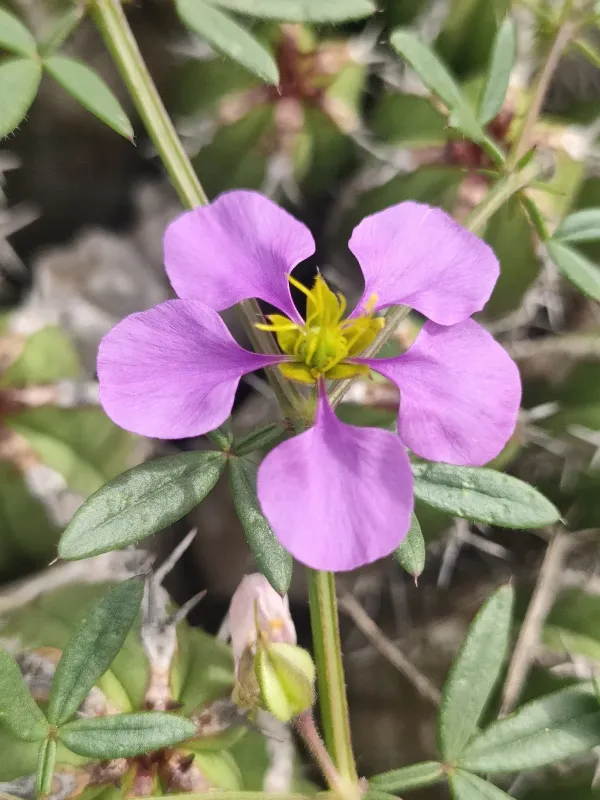
Description
Sowing dates
Fagonia cretica is a thermophilic species that requires warm soil conditions for successful germination, typically necessitating sowing after all frost risks have passed.
The optimal sowing window is late spring, specifically when ambient temperatures consistently reach 18–22 degrees Celsius, facilitating rapid seedling emergence.
Seeds often benefit from scarification or soaking treatments to break physical dormancy, ensuring a more uniform and predictable plant density across the field.
Direct seeding in rows with spacing of 50–60 centimeters is recommended to allow for adequate airflow and easy access for mechanical weed control operations.
In regions with shorter growing seasons, starting seeds in greenhouses and transplanting them after the last frost provides a significant advantage for crop maturity.
Growing requirements
Belonging to the Zygophyllaceae family, this species is naturally adapted to arid and semi-arid environments, preferring well-drained, stony, or sandy soil types.
Abundant sunlight is the primary requirement for Fagonia cretica, as shading or cloudy conditions can severely inhibit its growth and secondary metabolite production.
The crop exhibits remarkable drought resistance, which makes it an ideal candidate for low-input agriculture in arid zones where irrigation capacity is limited.
Soil pH should ideally be neutral or slightly alkaline, as the plant naturally flourishes in carbonate-rich substrates common in its native Mediterranean habitats.
Excessive humidity must be avoided, as the plant is highly susceptible to root rot in waterlogged conditions, necessitating excellent drainage in all planting sites.
Main diseases and pests
The primary threats to Fagonia cretica production are related to fungal pathogens that thrive in high humidity, such as various species of soil-borne fungi.
Pest pressure is generally low due to the plant's phytochemical composition, but aphids can occasionally infest tender new shoots during the spring growth phase.
Weed management is most critical during the establishment period, as the seedlings are slow to gain vigor and can be easily outcompeted by aggressive weeds.
Physiological stress resulting from extreme temperature fluctuations or moisture imbalance can impact the flowering stage and overall harvest quality.
Implementing a strict crop rotation schedule helps in maintaining soil health and preventing the buildup of host-specific pathogens within the cultivation area.
Harvesting
The harvesting process should be executed during the peak flowering period to ensure maximum concentration of bioactive compounds in the harvested aerial biomass.
Plants are typically cut at the base, and the biomass is gathered for immediate drying to prevent degradation of its medicinal and aromatic properties.
Controlled drying at moderate temperatures is essential, as overheating can cause the loss of essential volatile components, thereby reducing the commercial value.
Once dried, the material is cleaned and processed to remove non-target parts, such as woody root remnants or accidental field debris, ensuring high-quality standards.
Proper storage in airtight, dark containers is necessary to maintain the integrity of the herbal material, protecting it from moisture and UV light degradation over time.