
Fagonia scabra
Fagonia scabra
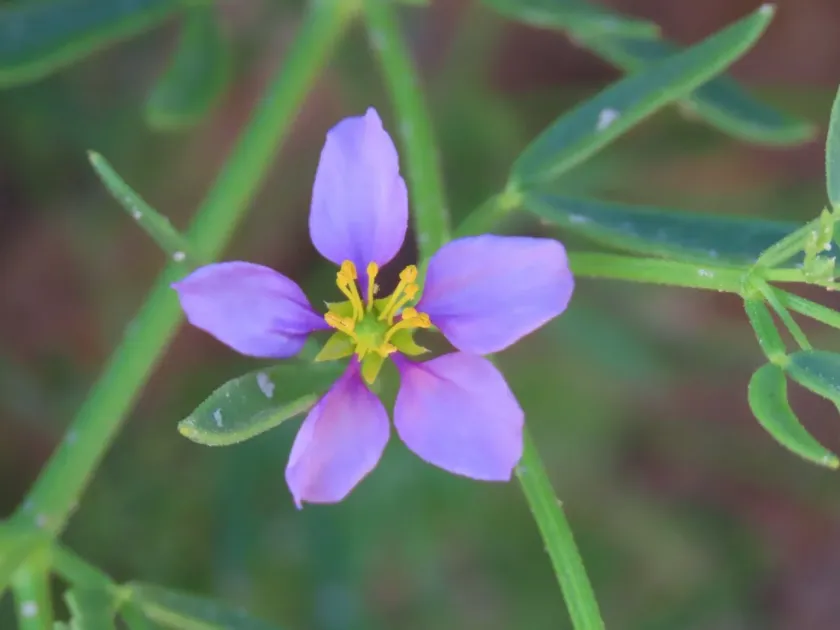
Description
Growing requirements
Fagonia scabra is a perennial subshrub belonging to the Zygophyllaceae family. The plant is evolutionarily adapted to the extreme conditions of arid zones, growing primarily in rocky and sandy soils typical of deserts and semi-deserts.
This species is characterized by a high degree of xerophytism, which allows it to thrive under conditions of critical moisture deficit and intense solar radiation. Its botanical structure includes a well-developed root system capable of penetrating deep soil layers to locate groundwater.
The stems of Fagonia scabra are covered with specific glandular hairs, which give the plant a rough texture and help reduce transpiration. The leaves are typically small, often reduced, or equipped with stipules in the form of sharp spines, serving as a protective mechanism against grazing animals.
For successful vegetation, the culture requires plenty of heat and a minimal level of precipitation, characteristic of subtropical deserts. It prefers well-drained soils with a high mineral content and an alkaline pH reaction.
Cultivation techniques in introduced environments require the complete avoidance of waterlogging, which is detrimental to the root system. An important factor is ensuring an optimal lighting regime, as the plant is extremely light-demanding and sensitive to shading.
Yield
The economic use of Fagonia scabra is most often associated with its valuable phytochemical properties. In traditional and modern medicine of the regions where it grows, the plant is valued for the presence of saponins, flavonoids, and alkaloids.
The raw material is harvested by carefully collecting the above-ground biomass during the flowering period, when the concentration of biologically active substances reaches its maximum. Drying is performed in shaded, well-ventilated areas to preserve its medicinal properties.
The economic significance of Fagonia lies in its potential as a source of valuable compounds for the pharmaceutical industry. In some regions, it is also considered a forage reserve for camels during periods of acute scarcity of pasture vegetation.
The culture demonstrates high resistance to land degradation, which allows its use in phytoremediation projects in desertified territories. This provides a long-term perspective for collecting plant material in natural conditions without depleting biodiversity.
The productivity of stands or natural patches depends on annual precipitation, yet even with low biomass, the value of its chemical composition makes harvesting this plant an economically viable process.