
Fagonia arabica
Fagonia arabica
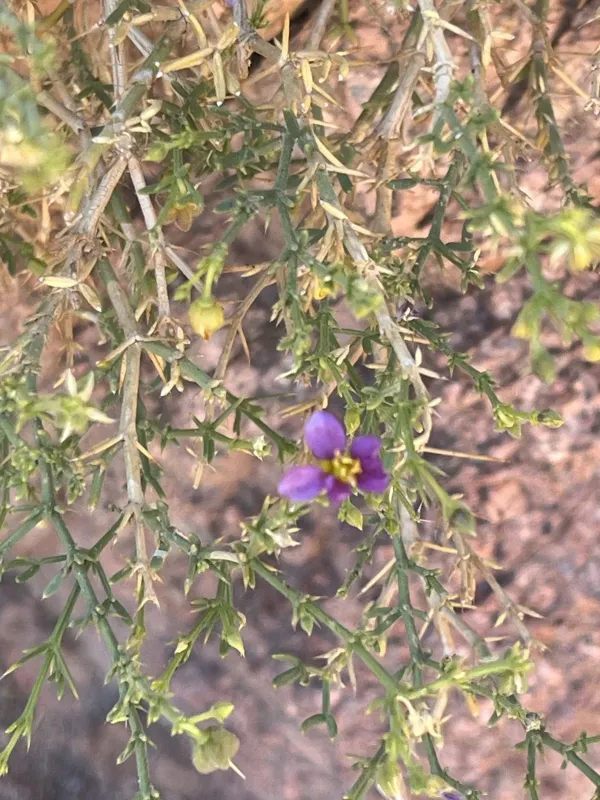
Description
Sowing dates
Fagonia arabica is a wild desert perennial and does not follow conventional agricultural sowing schedules. In its native habitat, germination is strictly triggered by seasonal rain patterns and specific temperature thresholds.
For research and cultivation purposes, seeds are sown in a substrate that mimics desert conditions. Timing is usually aligned with late autumn to simulate natural weather cycles that favor slow development.
The seeds are placed shallowly in the soil, as they are evolved to sprout after minor surface moisture events. Proper seed contact with the medium is essential for initiation of the germination process.
Initial growth is notably slow, reflecting the plant's strategy to conserve energy in harsh environments. Artificial lighting or climate control systems are generally not required for this robust species.
Care must be taken to avoid overcrowding, as mature plants require space to develop their characteristic woody, thorny structure. Competition for root space can lead to reduced vigor.
Growing requirements
Belonging to the Zygophyllaceae family, Fagonia arabica is perfectly adapted to arid zones. It is commonly found in desert regions across North Africa and the Middle East where water is scarce.
The plant thrives in sandy, gravelly, or calcareous soils with very low organic matter content. It possesses a high tolerance for salinity, making it a candidate for restoring degraded arid landscapes.
Full sun exposure is an absolute necessity for this plant. It requires high solar radiation to synthesize the complex secondary metabolites that define its pharmacological value.
Water requirements are extremely low once the plant is established. Any excess soil moisture, especially during the dormant season, is detrimental and often leads to root rot diseases.
The species excels in environments with extreme diurnal temperature shifts. Its physiological adaptations allow it to maintain cellular integrity under temperatures that would dehydrate typical crops.
Yield
Yield for Fagonia arabica is measured by the harvest of its aerial biomass, which is rich in flavonoids and other bioactive compounds. Production is limited by the plant's inherently slow growth rate.
Economic viability depends on the concentration of active substances rather than total bulk weight. Therefore, cultivation focus is shifted toward maximizing quality through controlled environmental stress.
Harvesting biomass from established perennial stands provides the most consistent yield. New plantations require several years to reach maturity before the first commercial cutting can occur.
While experimental irrigation can boost biomass production, it often alters the plant's metabolic profile, potentially diluting the potency of its medicinal extracts.
Yield assessment includes rigorous testing of phytochemical consistency. Variations in climate and soil chemistry play a significant role in the overall quality of the annual harvest.
Main diseases and pests
The most significant threat to Fagonia arabica is root disease caused by poor drainage. Over-saturation of the substrate promotes fungal pathogens that quickly destroy the vascular system.
Insects that specialize in arid plants can occasionally damage the foliage, though the plant's spines provide an effective physical barrier against most common agricultural pests.
Powdery mildew can pose a risk during periods of high humidity or excessive nighttime condensation, even in desert environments. Such conditions typically occur in proximity to artificial oases.
Seed-eating insects are a concern during post-harvest storage. Proper drying and treatment of seed lots are necessary to prevent losses due to infestations during warehouse operations.
Overgrazing by local livestock poses a major threat to wild populations. Protective fencing is essential to maintain the health of stands that are designated for regular commercial harvest.
Harvesting
Harvesting occurs when the plant is in full bloom, as this period corresponds to the highest concentration of therapeutic compounds. Hand-cutting is the primary method of collection.
Freshly cut biomass must be processed immediately to prevent degradation. Removing debris, sand, and non-medicinal woody parts is a standard requirement for high-quality production standards.
Drying is performed in shaded, well-ventilated areas to preserve delicate compounds. Direct sunlight can cause rapid breakdown of active ingredients, significantly reducing product efficacy.
Storage involves breathable, moisture-resistant packaging. This ensures the plant material stays dry and protected from environmental factors that could induce mold or chemical spoilage.
Logistics and record-keeping are critical to ensure product traceability. Each batch is tagged with the harvest date and site conditions to maintain quality control for pharmaceutical buyers.