
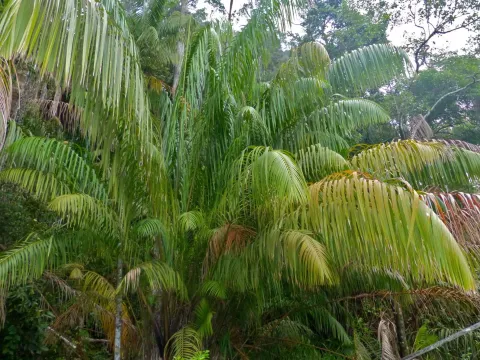
Eugeissona
Eugeissona
The propagation of Eugeissona is typically achieved through seeds, which must be sown immediately after maturation due to their extremely short shelf life and susceptibility to drying out.
What the section contains


Eugeissona
For successful germination, the seeds require a nutrient-rich, organic soil mixture that maintains constant moisture levels. The optimal temperature range for germination is 25–30 degrees Celsius.
In cultivation, young seedlings are kept in nurseries to ensure they develop a robust root system. Care must be taken during transplantation, as the roots are highly fragile and sensitive to damage.
Growth during the initial stages is characteristically slow. Seedlings need consistent protection from direct sun and invasive weeds to ensure they become established before being planted in the field.
Proper spacing is crucial when planting out in plantations. Providing enough space for each palm reduces competition for nutrients and sunlight, ultimately supporting better long-term growth.
Eugeissona belongs to the Arecaceae family and is native to the tropical regions of Southeast Asia. It thrives best in environments that replicate the humid conditions of tropical forests.
The species requires consistently high temperatures throughout the year. It cannot tolerate cold weather or frost, which can cause irreversible damage to the plant's metabolic systems.
Regarding soil preferences, the palm thrives in deep, well-draining yet moisture-retentive soils. It is notably resilient and capable of growing in acidic soils often found in rainforest habitats.
Light requirements involve a need for bright, dappled sunlight. While established palms can tolerate higher light levels, young plants are vulnerable to heat stress and require partial shade.
The plant relies on high atmospheric and soil moisture. Supplementing water during dry spells is recommended to maintain the high rate of biomass production typical of this species.
The primary economic output of Eugeissona is starch extracted from the stem's pith. The quantity of the harvest depends heavily on the age of the palm and local environmental conditions.
Starch production is concentrated in the soft inner core of the trunk. Harvesting involves felling mature trees to access this vital source of carbohydrates, often used locally as a staple food.
Secondary utilization of the plant includes the use of its sturdy leaves for roof thatching and weaving materials. These leaves offer excellent durability in tropical climates.
Sustainable plantation management involves carefully rotating harvests to ensure the long-term viability of the population. This allows for continuous productivity across multiple planting cycles.
The low-input nature of growing Eugeissona makes it a valuable asset for subsistence and small-scale commercial farming in its native tropical range.
Pests such as palm weevils pose the most significant threat to Eugeissona. Larvae boring into the stem can destroy tissue, leading to structural instability and reduced starch quality.
Fungal pathogens are a major risk in areas with poor airflow or stagnant water. Root rot is particularly dangerous and can lead to the rapid decline and death of the plant.
Small mammals and rodents may damage the growing points of young seedlings. Protective fencing or clear monitoring of the nursery areas is essential to minimize such losses.
Poor soil nutrition or incorrect pH levels can weaken the palm's natural resistance, making it more susceptible to infections. Regular soil amendments help maintain plant health.
Integrated pest management strategies are recommended, focusing on the early detection of infestations to prevent the spread of disease across the entire plantation.
Harvesting for starch is ideally timed just before the palm begins its flowering cycle. During this phase, the concentration of stored starch in the stem reaches its peak.
The process involves traditional manual techniques to fell and split the stem. Once extracted, the soft pith must be processed to isolate the starch granules from the fibrous material.
Washing and drying the extracted starch are critical steps to prevent spoilage. Properly processed starch can be stored for long periods, making it an essential food reserve.
Leaves are harvested manually throughout the year, focusing on mature, undamaged specimens. Proper harvesting of leaves ensures that the palm continues to provide materials over time.
Effective harvest management relies on balancing the extraction of the starch with the sustainable regrowth of the palm population, ensuring the resource remains available for future cycles.