
Eugeissona tristis
Eugeissona tristis
Description
Growing requirements
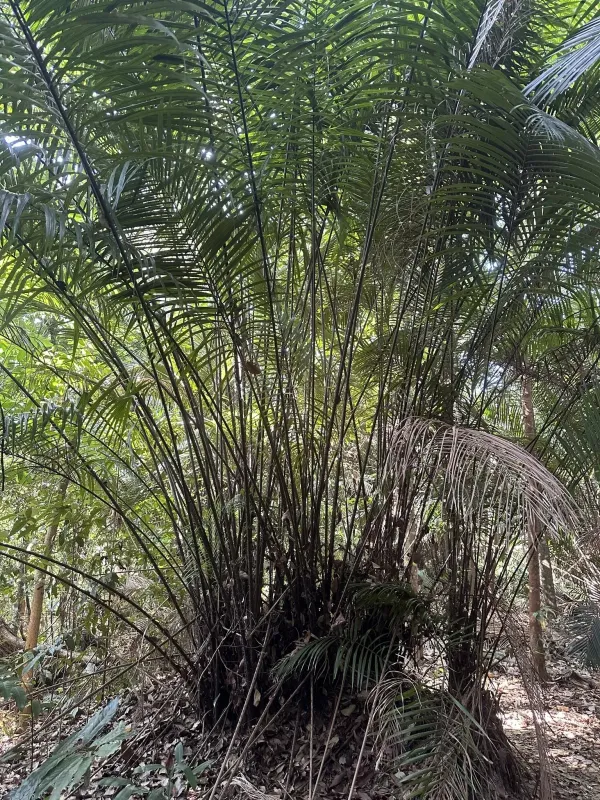
Eugeissona tristis is a distinct species of palm belonging to the Arecaceae family. It is native to the tropical rainforests of Borneo, where it typically thrives in the understory of dense forest ecosystems, adapting to low-light conditions.
The species requires a strictly tropical environment characterized by high humidity levels and consistent, warm temperatures throughout the entire year. It does not tolerate prolonged dry spells or extreme temperature drops, making it unsuitable for cultivation in non-tropical climates.
Regarding soil requirements, Eugeissona tristis favors well-drained, acidic forest soils rich in organic matter. The physical structure of the soil must ensure sufficient moisture retention while allowing for the aeration necessary for the palm's root health.
Agrotechnical management of this plant is challenging because of its exceptionally slow growth cycle. Unlike commercial oil palms, this species is not suited for intensive plantation settings and is mostly found in wild or semi-wild populations.
Botanically, it is classified as a short-stemmed palm, often appearing almost stemless due to its low-growing habit. Its pinnate leaves form a robust rosette that helps the plant manage its micro-environment by trapping organic litter and retaining surface moisture.
Harvesting
The economic value of Eugeissona tristis is primarily confined to indigenous knowledge and traditional subsistence practices. The harvest is conducted by local communities who utilize parts of the plant for domestic needs.
The succulent inner buds and shoots are edible and serve as a supplemental food source for local forest-dwelling communities. Careful harvesting is required to ensure the survival of the individual plant, as the buds are a critical growing point.
Large, resilient fronds are harvested and bundled for use as durable thatch for roofs of traditional jungle houses. These leaves are highly valued for their water-repelling properties and structural integrity against heavy tropical rains.
The fibers derived from the palm are frequently used to weave baskets, mats, and other utility items. The mechanical strength of the plant fibers makes them an excellent resource for creating lightweight yet durable household tools.
- Edible palm hearts and shoots.
- Thatching material for traditional roofs.
- Sustainable source of fibers for craft weaving.