
Eugeissona utilis
Eugeissona utilis
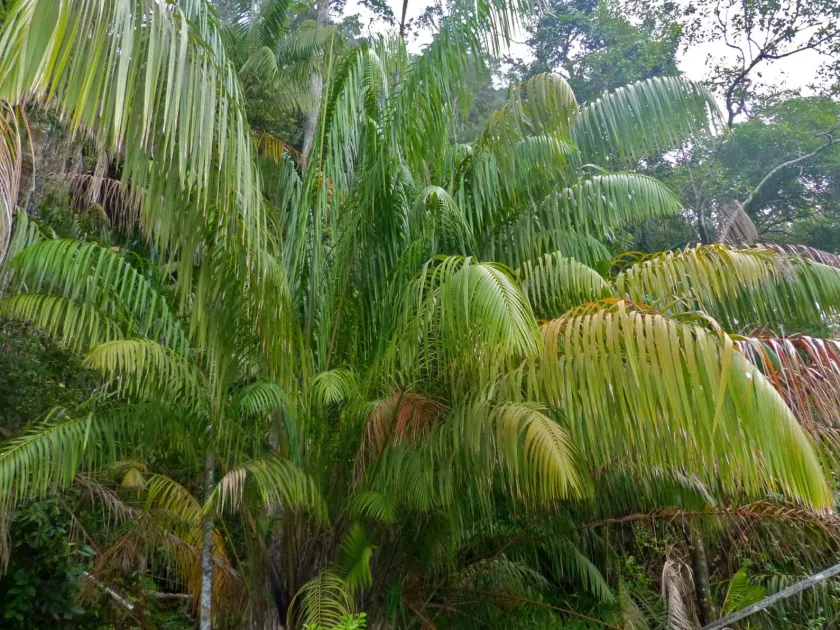
Description
Sowing dates
Eugeissona utilis propagates primarily through seeds within its natural habitat. The germination process is slow and requires very specific moisture levels and stable temperatures to activate the dormant embryo.
In controlled nursery environments, seeds must be sown immediately after harvest in well-draining organic media. Maintaining a consistent temperature between 28 and 32 degrees Celsius is crucial for successful germination.
Seedlings are transplanted after developing their third or fourth leaf. Care must be taken to provide partial shade, as young palms are sensitive to direct, intense tropical sunlight during their early development stages.
Field planting usually coincides with the start of the rainy season to ensure young plants establish a robust root system before any potential dry spell. Spacing is determined by the intended purpose of the plantation.
As a slow-growing perennial, long-term land management is essential. Establishing a plantation requires patience, as the palm spends several years developing its initial foliage and internal structure.
Growing requirements
Eugeissona utilis belongs to the Arecaceae family and is native to the tropical rainforests of Borneo. It is specialized to thrive in peat swamps and areas with high water tables, reflecting its unique ecological adaptation.
The crop requires high humidity and consistent soil moisture. Prolonged dry periods lead to stunted growth and reduced metabolic activity, eventually affecting the palm's ability to store starch in its trunk.
Optimal soil conditions are acidic to slightly acidic, rich in organic matter. This organic layer is vital for nutrient cycling, which supports the plant's long-term growth and internal starch accumulation.
While the species is light-demanding, it requires canopy protection during its juvenile phase. As it matures, the palm effectively utilizes high-intensity light in the upper forest strata for optimal photosynthesis.
A stable climate with minimal diurnal temperature fluctuations is essential. The species is perfectly suited to lowland tropical environments where temperature and rainfall remain relatively constant year-round.
Yield
The primary economic product is sago, a high-quality starch extracted from the palm's pith. The yield is age-dependent, reaching its peak just before the plant enters its reproductive, flowering stage.
The maturation period of the trunk spans approximately 10 to 15 years. This long production cycle necessitates strategic long-term planning, as the starch content increases steadily as the plant matures.
The extraction process yields a significant amount of starch per trunk, making this palm an essential subsistence and trade resource in its native range. Quality control during extraction ensures a superior product.
In addition to starch, the palm produces edible seeds that are valued for their nutrient content and unique flavor. These are harvested as they mature, providing a secondary revenue stream for producers.
The palm is highly valued for its ability to produce food on marginal, swampy lands that are unsuitable for conventional row crops, making it a sustainable choice for tropical land use.
Main diseases and pests
The species is susceptible to fungal root infections, especially in waterlogged areas where drainage is impeded. These pathogens can cause significant decay, potentially leading to the death of the palm.
Wood-boring insects, particularly beetle larvae, represent the most significant pest threat. These pests create galleries within the trunk, consuming the starch-rich tissue and reducing the harvestable output.
Anthropogenic pressure, specifically deforestation for monoculture plantations, is the primary threat to the natural distribution of Eugeissona utilis. Conservation of forest pockets is vital for genetic diversity.
Soil salinity can induce nutrient deficiencies, manifesting as leaf chlorosis and inhibited growth. Maintaining balanced soil chemistry is crucial for preventing these physiological stress symptoms.
Monitoring for signs of insect boring or leaf wilting is essential for management. Early detection allows for the implementation of sanitation measures to prevent localized outbreaks from spreading.
Harvesting
The harvest involves felling the trunk immediately before the palm begins to flower. This timing is critical, as it ensures that the starch concentration in the pith is at its maximum level.
Once felled, the trunk is split to access the starch-laden pith. This material is pulverized, washed in running water, and filtered to separate the pure starch from the fibrous plant tissues.
The extraction process is water-intensive, often requiring proximity to a water source. Modern processing improvements aim to increase the efficiency of starch recovery while maintaining sustainability.
Seeds are harvested manually from the ground after they fall. They must be cleaned and dried properly to prevent mold growth, which can occur rapidly in the high-humidity environment of the rainforest.
Traditional harvesting methods remain the norm due to the terrain and the specific biological requirements of the palm. Sustainable harvesting practices include replanting cycles to ensure future availability.