
Eriosyce senilis
Eriosyce senilis
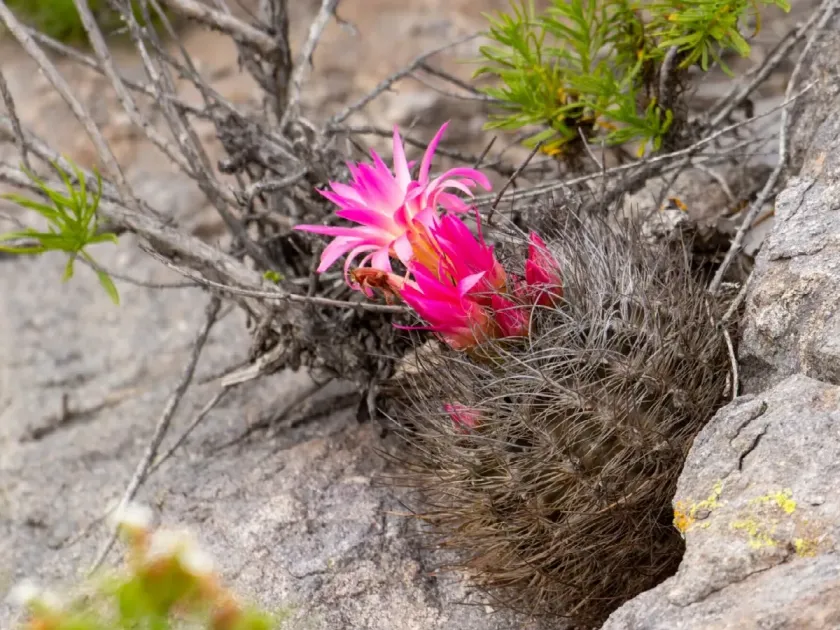
Description
Sowing dates
The propagation of Eriosyce senilis is primarily conducted through seeds, as this species rarely produces offsets. The ideal sowing period is spring, coinciding with the increase in natural daylight hours.
A sterile, well-draining substrate is critical for success. A mixture of fine river sand, perlite, and a small portion of peat provides the necessary structure to prevent the collapse of delicate seedlings.
Seeds should be sown on the surface of the moist substrate without burial. Covering the container with a clear lid creates a humid microclimate essential for germination, which typically occurs within two to four weeks.
Temperature control is vital; maintaining a steady 22–25 degrees Celsius promotes even germination. Temperatures exceeding 30 degrees should be avoided as they inhibit the development of young plants.
After the first spines develop, the seedlings require gradual acclimation to lower humidity. This process prepares them for the transition to individual pots, ensuring long-term plant health.
Growing requirements
Eriosyce senilis belongs to the Cactaceae family and is native to the arid mountains of Chile. Its agricultural requirements are dictated by its adaptation to high-altitude, sun-drenched environments.
This cactus demands high light intensity. Without sufficient direct sunlight, the plant will become etiolated and lose the dense, hair-like spines that serve as its primary decorative feature.
The soil must be inorganic and porous, mimicking rocky mountain slopes. A mixture of gravel, volcanic rock, and coarse sand with a low organic content is ideal for preventing moisture retention near the roots.
Watering requires strict discipline. During the active growing season, water only when the potting mix is thoroughly dry. In winter, the plant enters dormancy and should be kept completely dry in a cool, well-ventilated area.
Effective air circulation is essential to prevent physiological disorders. Stagnant air combined with moisture quickly leads to fungal infections that can be lethal to the species.
Main diseases and pests
Root rot is the most common condition affecting Eriosyce senilis, typically caused by improper watering practices or heavy, water-retentive soil mixtures. Once rot begins, recovery is extremely difficult.
Mealybugs are significant pests for this species. They find refuge within the plant's dense spines, making early detection and manual removal challenging for the cultivator.
Spider mites are common in indoor environments with low humidity. They feed on the epidermis, creating necrotic spots that destroy the visual appeal and weaken the plant's structural integrity.
Root-infesting mealybugs can inhabit the soil, feeding on the root system and causing a steady decline in plant health that is often misattributed to environmental stress.
Routine inspection using a magnifying glass is recommended to catch infestations before they become systemic. Chemical control should be implemented using products specifically formulated for cacti to avoid tissue damage.