
Eriosyce marksiana
Eriosyce marksiana
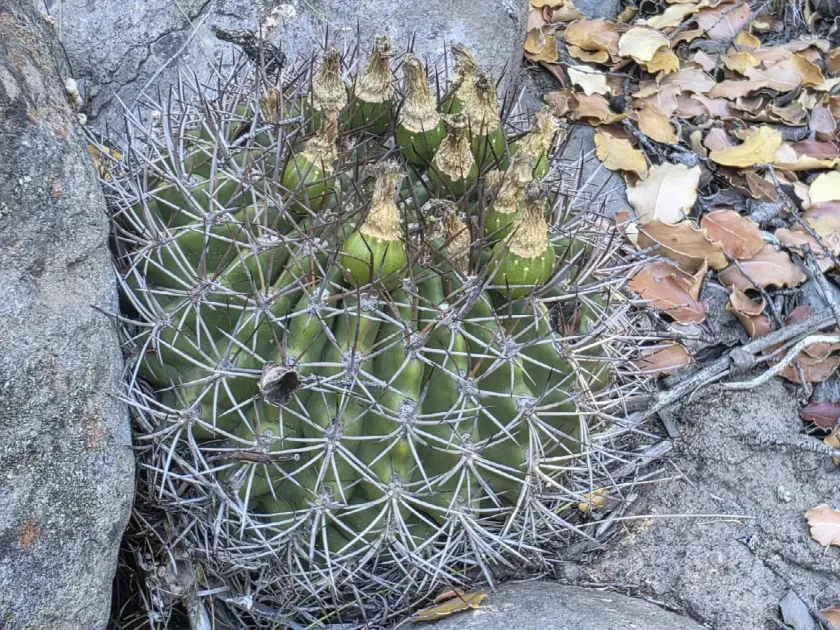
Description
Growing requirements
Eriosyce marksiana is a distinct species belonging to the Cactaceae family, native to the arid regions of Chile. This plant is highly prized in professional succulent collections due to its slow-growing, spherical form and striking spine structures.
Botanically, the species is adapted to survive in extreme desert environments with intense sun and scarce precipitation. Its thickened stem serves as a water reservoir, while the dense arrangement of spines provides necessary shade to the epidermis to prevent sunburn.
For successful cultivation, a highly inorganic soil mix is essential. Growers should use a substrate composed of 70% volcanic rock, coarse sand, and 30% acidic peat or leaf mold, ensuring rapid drainage to prevent water stagnation in the root zone.
The cultural environment requires full sun exposure and excellent air circulation. During the active growth season, temperatures should mimic the warm desert days, while ensuring the cactus is not subjected to humidity levels that promote pathogen growth.
Agrotechnical maintenance focuses on a strict dormant winter period. During this time, the plant must be kept completely dry at temperatures between 5°C and 10°C to simulate natural seasonal changes and induce the following season’s blooming cycle.
Main diseases and pests
The primary threat to Eriosyce marksiana is physiological stress resulting from excessive watering during low light or cold periods, which invariably leads to rot in the root and stem tissues.
Pests such as mealybugs and red spider mites are common concerns for this species. These organisms often exploit the density of the spines as a hiding place, requiring careful monitoring and preventive applications of systemic pesticides.