
Encyclia tampensis
Encyclia tampensis
Description
Growing requirements
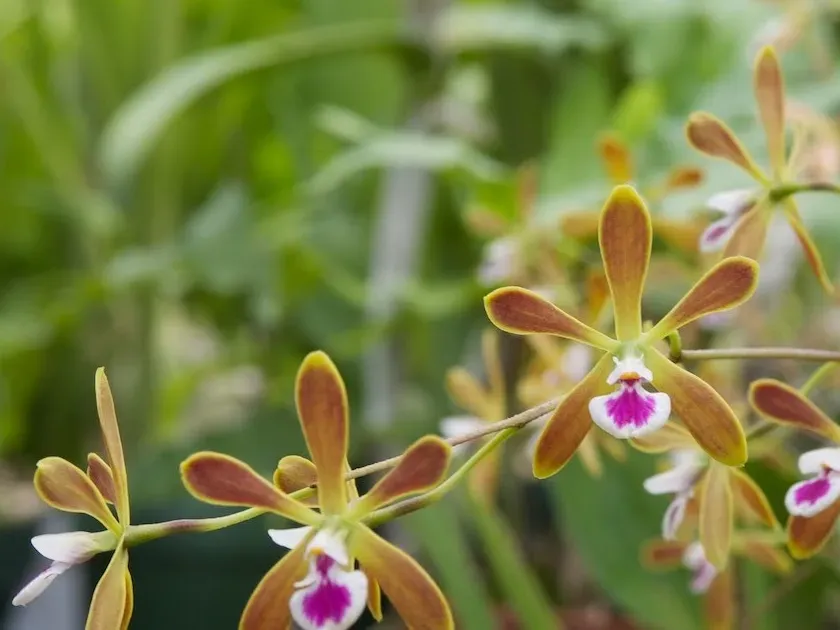
Encyclia tampensis, commonly known as the Florida butterfly orchid, is an epiphytic species within the Orchidaceae family. It is native to the Florida peninsula and the Caribbean islands, where it naturally colonizes tree trunks, often found in swampy or hardwood hammocks.
The plant features small, clustered pseudobulbs that support stiff, linear leaves. This orchid is highly valued for its numerous fragrant, dainty flowers that showcase a variety of yellow-green petals and a distinctly veined purple lip, resembling a butterfly in flight.
Environmental requirements for this culture include high levels of bright, filtered light. While it can withstand periods of dry conditions, it thrives best when humidity levels are maintained between 60 and 70 percent, mirroring its natural humid habitat.
Cultivation should prioritize aeration for the root system. As an epiphyte, it does not tolerate standard potting soil; instead, growers should use a coarse medium such as pine bark, charcoal, or perlite to facilitate drainage and prevent the roots from suffocating.
Temperature management is crucial for the flowering cycle. The plant prefers daytime temperatures between 22 and 29 degrees Celsius, with a significant drop at night, which helps trigger the development of new spikes during the growing season.
Main diseases and pests
The primary pests affecting Encyclia tampensis include scale insects and spider mites, which thrive in low-humidity environments. Periodic cleaning of the leaves and the use of neem oil or insecticidal soap are recommended to manage and prevent infestations.
Pathogenic threats include crown rot and various bacterial leaf spots, usually exacerbated by poor air circulation or over-watering. Maintaining optimal airflow around the plant is the most effective preventative measure against these infections.