
Encyclia fucata
Encyclia fucata
Description
Growing requirements
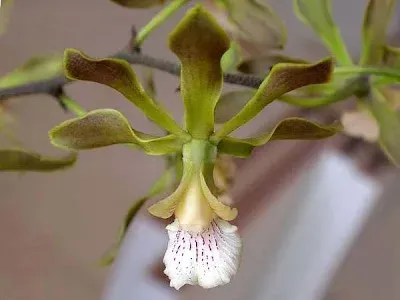
Encyclia fucata is a perennial epiphytic orchid species belonging to the family Orchidaceae. This plant is native to the Caribbean region, with a primary distribution range across Cuba, where it grows naturally on tree trunks in tropical forested environments, utilizing its root system for stability rather than nutrient uptake from soil.
To cultivate this species successfully, one must mimic its natural tropical environment. It thrives in conditions with high humidity levels ranging from 60% to 80% and requires a significant diurnal temperature variation to stimulate vegetative growth and successful blooming cycles throughout the year.
The potting medium must provide exceptional drainage and airflow to the roots. Unlike traditional agricultural crops, Encyclia fucata should be planted in high-quality pine bark chips mixed with perlite, charcoal, and sphagnum moss. Planting in cedar or teak baskets often yields the best results for mature specimens.
Light requirements are intense but must be filtered to prevent tissue damage. Providing bright, indirect light is essential for the photosynthesis of the pseudobulbs, which serve as water storage organs. Positioning the plant near an east-facing window or under moderate shade cloth in a greenhouse is optimal.
Watering should be approached carefully, following a rhythm that allows the substrate to dry out slightly between sessions. Excessive moisture around the root zone is the primary cause of plant decline. Utilizing a "soak and dry" method ensures that the roots receive hydration without remaining waterlogged.
Main diseases and pests
The most common threats to Encyclia fucata are fungal pathogens, specifically those causing root and crown rot. These infections are almost always triggered by inadequate ventilation or allowing water to pool in the leaf axils for extended periods, creating an anaerobic environment conducive to bacterial growth.
Scale insects present a major pest challenge for this orchid. These pests attach themselves to the undersides of leaves and the surfaces of pseudobulbs, draining vital sap. Manual removal using cotton swabs soaked in isopropyl alcohol is an effective non-toxic method for controlling small infestations.
Aphids can also infest the developing flower spikes, sucking nutrients and potentially transmitting viral diseases. If an infestation is detected, immediate removal of the insects is necessary to ensure the health of the upcoming bloom and the long-term vitality of the mother plant.
To maintain a healthy collection, it is vital to keep the growing area clean and free of decaying organic matter. Debris that falls into the potting basket can decompose, increasing the risk of attracting pests or creating conditions that promote mold growth around the orchid's base.
When using fertilizers, one must be cautious of salt buildup. Providing a periodic "flush" with pure, demineralized water is a recommended cultural practice. This prevents the accumulation of mineral deposits on the roots, which can otherwise lead to root tip necrosis and reduced nutrient uptake efficiency.