
Encyclia acutifolia
Encyclia acutifolia
Description
Growing requirements
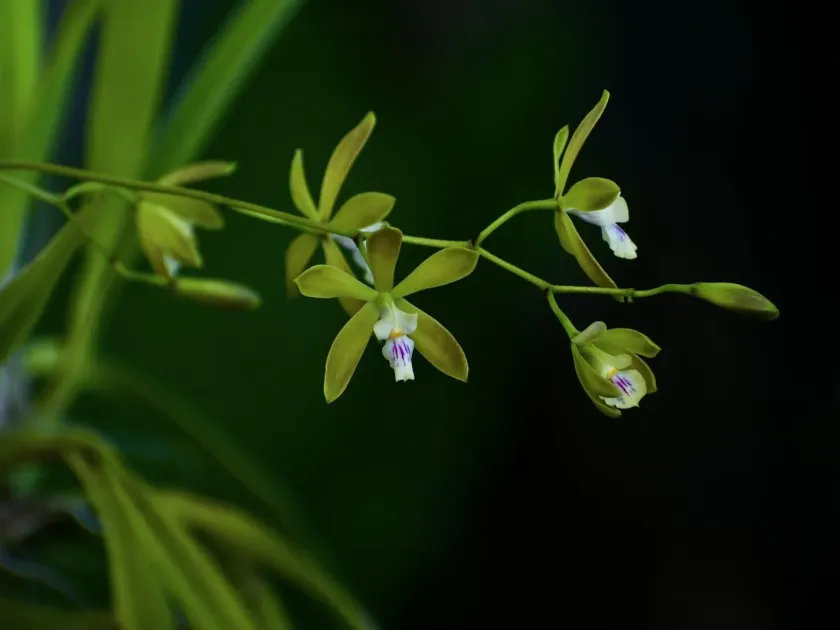
Encyclia acutifolia is an epiphytic orchid belonging to the Orchidaceae family. Native to the tropical regions of the Americas, this species has evolved to thrive in high-humidity environments, typically attaching itself to the bark of trees in forest canopies.
Botanically, it exhibits a sympodial growth habit characterized by tight, oval-shaped pseudobulbs that store water and nutrients. The leaves are characteristically sharp-pointed and leathery, allowing the plant to tolerate variations in ambient moisture levels.
Cultivation requires bright, indirect light to stimulate vegetative growth and flowering. Exposure to direct intense sunlight should be avoided to prevent thermal damage to the leaves, which can result in necrotic spotting and reduced plant vigor.
The root system must be kept in a well-draining, airy substrate to prevent root rot. Recommended materials include a mix of medium-grade pine bark, charcoal, and perlite, which ensures the roots have access to oxygen while maintaining appropriate moisture levels.
Temperature management is critical for this species. It prefers daytime temperatures between 22°C and 26°C with a distinct nightly drop of at least 5-8°C, which mimics the natural diurnal fluctuations of its native habitat and is essential for metabolic health.
Main diseases and pests
The primary threats to this culture are pathogenic fungi and bacteria that thrive in stagnant, wet conditions. Overwatering is the most common cause of root and rhizome rot, which can quickly lead to the death of the entire plant if left unaddressed.
Common pests include spider mites and scale insects. These pests often congregate on the undersides of leaves and around pseudobulb bases, weakening the plant. Regular monitoring and the application of mild horticultural oils or insecticidal soaps are recommended for control.