
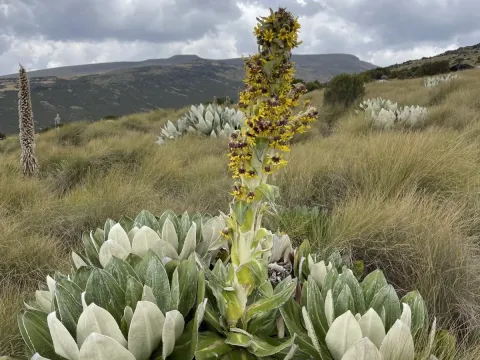
Dendrosenecio
Dendrosenecio
Dendrosenecio is a genus of giant rosette plants belonging to the Asteraceae family, native to the high-altitude afro-alpine regions of tropical Africa. These unique plants are renowned for their massive size and distinct ability to survive in environments with frequent freezing temperatures.
What the section contains


Dendrosenecio
The distribution of this genus is strictly limited to the alpine belts of mountains such as Kilimanjaro, Mount Kenya, and the Rwenzori Mountains. They are not an agricultural crop in the traditional sense but serve as vital components of their high-altitude ecosystems.
Cultivation of Dendrosenecio requires a precise simulation of mountain conditions, including high atmospheric humidity, intense ultraviolet exposure, and significant diurnal temperature fluctuations. Conventional agricultural techniques are generally inapplicable to these species.
The plants thrive in volcanic, highly porous, and well-drained soils. Root health is paramount, as waterlogging typically leads to rapid tissue necrosis and the collapse of the plant's vascular structure due to cold stress.
Due to the complexity of meeting their environmental needs, Dendrosenecio is primarily found in specialized botanical gardens and conservation projects rather than commercial farming operations.
The most significant threat to Dendrosenecio populations is the rapid alteration of the high-altitude climate, which restricts the suitable alpine niches where these plants can persist.
In artificial environments, the plants are highly susceptible to various fungal pathogens that thrive when ventilation is suboptimal and humidity is improperly managed.
Pests such as mealybugs and spider mites can severely stress the plants when kept in indoor or greenhouse collections, necessitating careful integrated pest management.
The loss of symbiotic fungal associations, which are likely present in native alpine soils, often hinders the development of these plants when introduced to conventional artificial substrates.
Human impact, ranging from direct destruction of the sensitive soil crust to broader climate change, remains the primary concern for the long-term viability of these giant plants.