
Dendrosenecio elgonensis
Dendrosenecio elgonensis
Description
Growing requirements
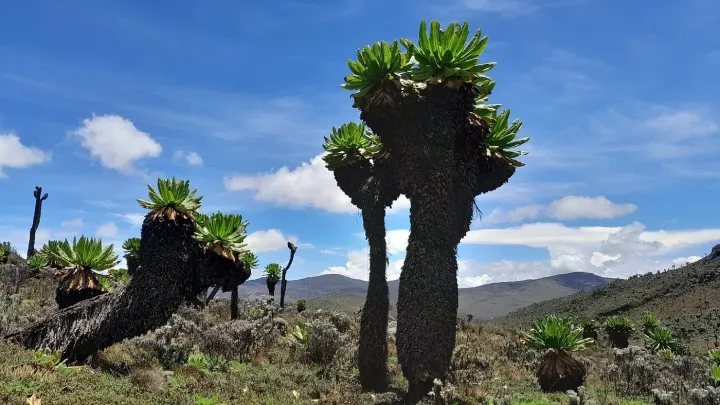
Dendrosenecio elgonensis is a fascinating woody member of the Asteraceae family, native to the high-altitude afro-alpine zone of Mount Elgon. It is characterized by its massive, rosette-forming structure that allows it to survive in harsh mountainous climates.
The plant requires specialized conditions that mimic its natural habitat at elevations exceeding 3000 meters. This includes high UV exposure and a specific thermal cycle that involves sharp transitions between daytime warmth and nighttime cold temperatures.
Cultivation substrates must be extremely well-draining, mirroring the volcanic soils found on its native mountain slopes. Soil compaction is detrimental, as it interferes with the plant’s ability to manage its water intake and gas exchange in the root zone.
Watering strategies for this species must be precise; excessive irrigation leads to immediate stress and promotes the growth of pathogens. The plant is evolved to thrive in environments with intermittent moisture and high drainage.
Understanding the physiological adaptation of this species is key to its cultivation. Its thick leaves act as heat accumulators and insulation, which is an essential feature for maintaining metabolic activity in the thin air of the afro-alpine belt.
Main diseases and pests
The primary threat to Dendrosenecio elgonensis in a controlled environment is root rot caused by poor soil aeration. If the moisture levels remain high for extended periods, the root structure degrades rapidly.
Fungal infections of the rosette are common if air circulation is insufficient. High humidity without consistent airflow creates an ideal environment for mold and mildew to compromise the plant's health.
Common horticultural pests such as spider mites can infest the dense foliage of the rosette. Due to the plant's slow growth rate, any infestation can cause significant, long-term damage that takes seasons to recover from.
Bacterial pathogens can enter through physical damage to the leaves or stem. It is crucial to handle the plants with care, ensuring that the integrity of the leaf tissues remains intact to prevent infection.
Nutrient deficiency may occur if the substrate lacks the necessary mineral balance, as the plant relies on a delicate balance of symbiosis with mountain soil microbes that are rarely present in artificial settings.