
Desert sunflower
Helianthus deserticola
Description
Growing requirements
Desert sunflower (Helianthus deserticola) is a distinct plant species belonging to the Asteraceae family. It is native to the arid desert regions of the southwestern United States, primarily localized in parts of Arizona and Utah, where it thrives in harsh, water-limited environments.
This species serves as a critical model for studying xerophytic adaptations in the genus Helianthus. It exhibits rapid growth stages triggered by ephemeral rainfall events, allowing the plant to complete its vegetative and reproductive cycles before the peak of extreme seasonal drought.
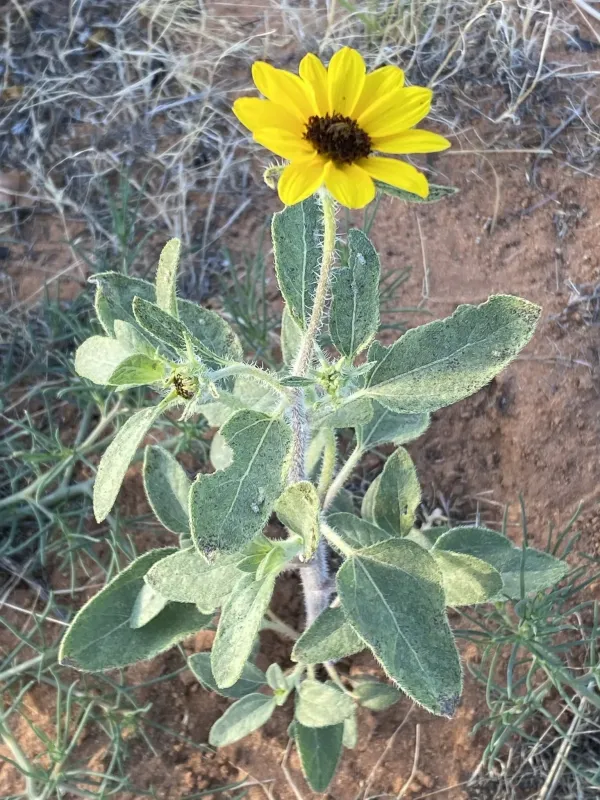
The morphology of the plant is finely tuned to its ecosystem. It features dense pubescence on its leaves and stems, which acts as a barrier against solar radiation and reduces transpiration losses, ensuring the plant maintains water balance even under intense desert heat.
Successful growth of this plant depends on specific soil conditions, specifically sandy or rocky substrates that provide excellent drainage. Helianthus deserticola is highly intolerant of waterlogging, which makes soil aeration and drainage the most critical factors for its survival and development.
In modern agriculture, the primary value of the desert sunflower lies in its genetic potential. As an extreme drought-tolerant relative of the common sunflower, it is a subject of intensive study by plant breeders aiming to incorporate these traits into elite germplasm to improve crop performance under climate stress.